
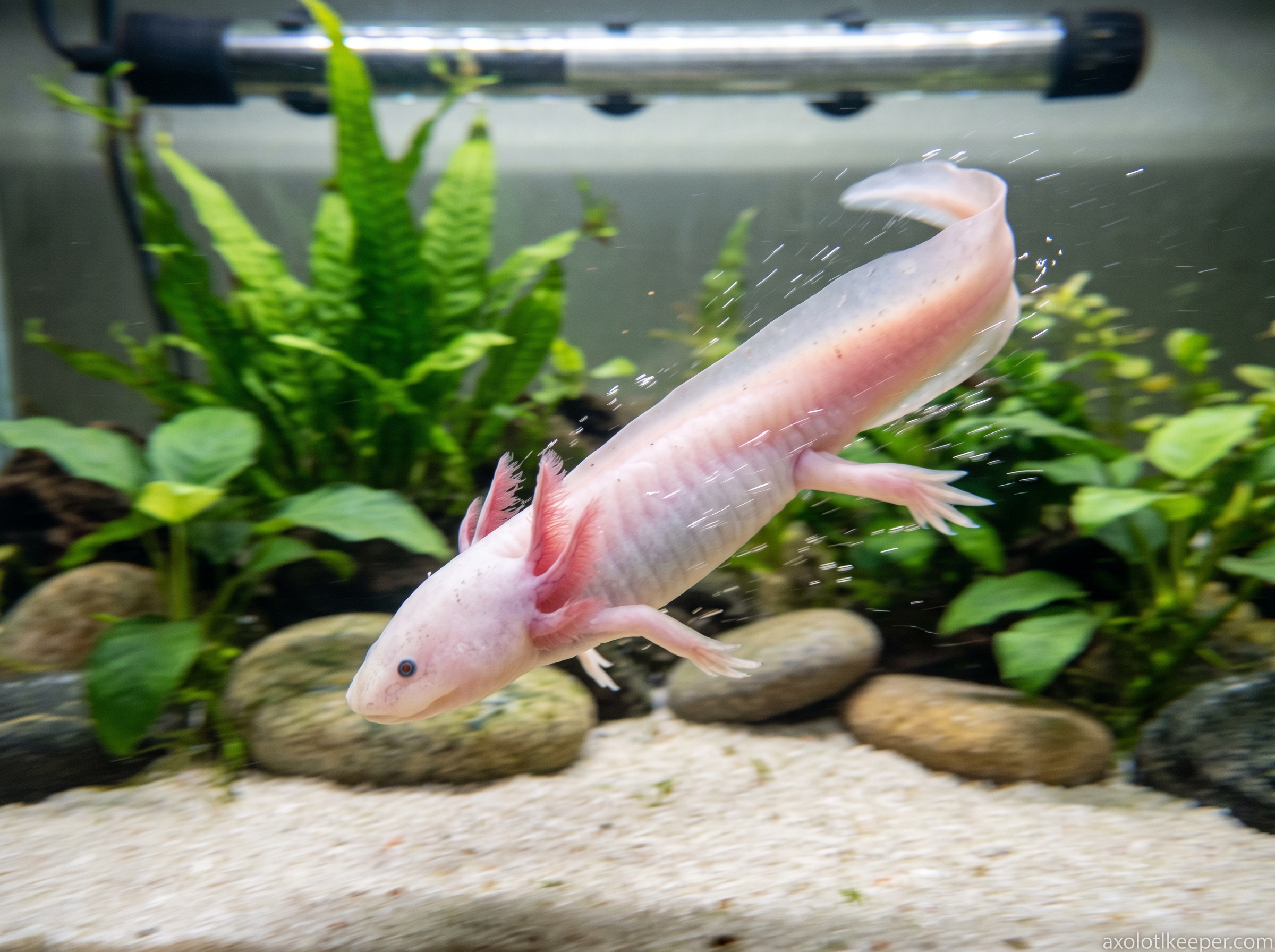
The axolotl, a unique aquatic salamander, is known for its remarkable regenerative abilities and captivating darting movements. These swift motions, often observed when the axolotl feels threatened or excited, are not just random flutters but rather a sophisticated form of locomotion. Understanding these movements can provide insights into the axolotl’s biology and behavior, revealing how this fascinating creature navigates its environment.
In this article, we will delve into the mechanics behind the axolotl’s darting movement, exploring the reasons for these quick bursts of speed, their significance in the wild, and what they reveal about the axolotl’s adaptations to its habitat. Whether you’re a biology enthusiast or simply curious about this remarkable creature, the darting movement of the axolotl offers a window into the complexities of aquatic life.

Understanding the Darting Movement of Axolotls
The darting movement of axolotls is a striking example of how these creatures have adapted to their environment. This movement is characterized by quick, agile bursts that allow them to evade predators and navigate through their aquatic surroundings. These darting actions are not just for show; they serve crucial survival functions. For instance, when faced with a predatory threat, an axolotl can swiftly change direction, often darting behind rocks or vegetation, thus utilizing its surroundings to enhance its escape.
Axolotls possess a unique body structure that facilitates these rapid movements. Their elongated bodies, combined with powerful tail muscles, enable them to propel themselves swiftly when necessary. The axolotl’s anatomy is specially designed for agility; the arrangement of muscles and the flexibility of their spine allow for a wide range of movement. Additionally, their buoyant bodies allow for quick directional changes, making them agile swimmers. Understanding these mechanics can shed light on how axolotls interact with their environment, showcasing a blend of evolution and adaptation.
Furthermore, the darting behavior is often triggered by environmental factors such as changes in water temperature, light, or the presence of potential threats. For instance, during daylight hours, axolotls may become more cautious, using darting movements less frequently to conserve energy. These responses highlight the axolotl’s sensitivity to its surroundings and its ability to react swiftly to changes that may affect its safety. Their darting movements can also be seen as a form of instinctive behavior that has developed over generations, enhancing their survival in the wild.
Mechanics of Darting Movement
The mechanics of the axolotl’s darting movement involve a combination of muscle contractions and body positioning. When an axolotl perceives danger, its nervous system sends signals to its muscles, prompting a rapid contraction of the tail and body. This contraction generates a powerful thrust, allowing the axolotl to dart away from the threat. The rapid firing of muscle fibers enables these quick bursts, demonstrating how the axolotl’s physiology is finely tuned for swift responses.
Additionally, the axolotl’s unique morphology plays a significant role in enhancing its swimming capabilities. The broad, flattened tail acts like a rudder, enabling precise steering and acceleration. This design is crucial for executing sharp turns and quick escapes, which are essential for survival in a predator-rich environment. The tail not only provides propulsion but also stability, allowing the axolotl to maintain balance while maneuvering swiftly through underwater landscapes.
The speed of these movements can vary based on the individual axolotl and environmental conditions. However, under optimal conditions, axolotls can achieve impressive bursts of speed, showcasing their adaptability in the wild. Studies have shown that under experimental conditions, axolotls can reach speeds of up to 1 meter per second, an impressive feat for a creature of its size. This capability not only aids in escaping predators but also plays a pivotal role in their hunting strategies.

Behavioral Significance of Darting
The behavioral significance of darting movements extends beyond mere escape responses. In the wild, axolotls use these swift motions as part of their hunting strategy as well. When chasing prey, such as small fish or invertebrates, the ability to dart quickly helps them catch their food effectively. Their darting movements can initiate a chase, allowing axolotls to surprise their prey, which often relies on camouflage and stillness for protection. This predatory behavior illustrates the dynamic relationship between predator and prey in aquatic ecosystems.
📖 Read also: The Fascinating Dance of Axolotls: Twirling in Water Like No Other
Moreover, darting can also serve as a form of communication among axolotls. During social interactions or territorial disputes, rapid movements can signal dominance or readiness to defend territory. For instance, males may engage in darting displays to assert their presence over rivals or during courtship rituals. Understanding these social cues can provide valuable insights into the complex behaviors of axolotls, revealing a less understood aspect of their social structure.
Additionally, darting movements are often displayed during mating rituals. Males may perform elaborate swimming displays, including darting motions, to attract potential mates. This multifaceted use of darting behavior underscores its importance in various aspects of the axolotl’s life, from survival to reproduction. The interplay between darting as a means of hunting and as a social signal highlights the versatility of this movement in the axolotl’s behavioral repertoire.
Comparison with Other Aquatic Creatures
When comparing the darting movements of axolotls with other aquatic creatures, several differences and similarities emerge. For instance, fish also exhibit rapid swimming capabilities, but their movements are often more streamlined and less reliant on body bending compared to axolotls. Fish tend to use their fins more prominently for propulsion and direction, whereas axolotls utilize a combination of their tail and body movements for a unique swimming style that accommodates their specific habitat.
Unlike fish, axolotls use a combination of body undulation and tail propulsion, which gives them a unique style of swimming. This distinction can be attributed to their evolutionary adaptations and habitat preferences. While fish are primarily adapted for open water environments, axolotls thrive in more complex aquatic ecosystems, such as lakes and canals, where obstacles like plants and rocks require more versatile locomotion. This adaptability is critical for their survival and reflects their evolutionary history.
Additionally, other amphibians, such as frogs, utilize darting movements as well, but they often employ a combination of swimming and jumping. Frogs may leap to escape threats or capture prey, showcasing a different evolutionary strategy. This highlights the diverse strategies employed by different species to navigate their respective habitats, demonstrating the varying adaptations that have developed in response to environmental pressures.

Environmental Factors Influencing Darting Behavior
Environmental factors play a crucial role in shaping the darting behavior of axolotls. Water temperature, clarity, and the presence of predators can significantly influence how and when these creatures exhibit their darting movements. For instance, warmer water temperatures can increase metabolic rates, leading to more frequent and vigorous darting behaviors. When temperatures rise, axolotls may become more active, increasing their chances of encountering prey, but also making them more visible to predators.
Furthermore, the clarity of the water can also impact their visibility to predators. In murky waters, axolotls may rely more on their darting movements to evade threats, whereas in clear waters, they might adopt a more cautious approach to conserve energy. The interaction of these factors can create a dynamic environment where the axolotl must constantly adjust its behavior to optimize its chances of survival. Understanding these environmental influences is essential for conservation efforts, as they underscore the importance of maintaining healthy ecosystems for axolotl populations.
As their habitats face challenges such as pollution and climate change, recognizing how these factors affect axolotl behavior can help researchers implement effective strategies for their protection. Monitoring water quality and temperature fluctuations can provide critical data for conservationists working to preserve these unique creatures and their habitats. As climate change continues to alter aquatic environments, understanding these influences on axolotl behavior becomes increasingly essential for their long-term survival.
📖 Read also: The Fascinating Curling Tail of Axolotls: Nature’s Wonder
Conservation and Preservation of Axolotls
The axolotl is facing significant threats in its natural habitat, primarily due to habitat destruction, pollution, and invasive species. The loss of wetlands and lakes has drastically reduced their populations, making conservation efforts critical. Efforts to restore and protect these vital ecosystems are necessary to ensure that axolotls can thrive in their natural environment.
Preserving the natural habitats of axolotls is essential not only for their survival but also for maintaining the biodiversity of aquatic ecosystems. Conservation programs focused on habitat restoration and protection are crucial in ensuring the future of this remarkable species. Initiatives such as the reintroduction of axolotls into restored habitats and the establishment of protected areas can contribute significantly to their recovery.
Additionally, public awareness and education about the importance of axolotls can foster community involvement in conservation efforts. By highlighting the unique behaviors, including their darting movements, we can engage more people in the mission to protect these extraordinary creatures. Community-driven conservation projects can play a pivotal role in raising awareness about the challenges faced by axolotls and the importance of preserving their habitats for future generations.
Questions to Ponder
As you explore the fascinating world of axolotls and their darting movements, consider the broader implications of their behavior and adaptations. What can we learn from their unique locomotion? How does understanding their movements enrich our knowledge of amphibian biology? These questions can inspire further exploration and appreciation for the wonders of nature. Examining the complexities of axolotl behavior may not only deepen our understanding of this species but also enhance our appreciation for the intricate connections within aquatic ecosystems.
Pertanyaan Umum (FAQ)
What is the primary function of the axolotl’s darting movement?
The primary function of the axolotl’s darting movement is to evade predators and escape dangerous situations. This rapid motion allows the axolotl to quickly change direction and distance when threatened.
How do environmental factors affect axolotl darting behavior?
Environmental factors such as water temperature, clarity, and the presence of predators can significantly influence the frequency and intensity of darting movements in axolotls.
Do all axolotls exhibit the same darting behavior?
While all axolotls possess the ability to dart, individual differences in behavior can occur based on factors such as age, health, and environmental conditions.
How can we help in the conservation of axolotls?
Conservation efforts can be supported through habitat preservation, pollution reduction, and raising public awareness about the importance of axolotls and their natural ecosystems.