
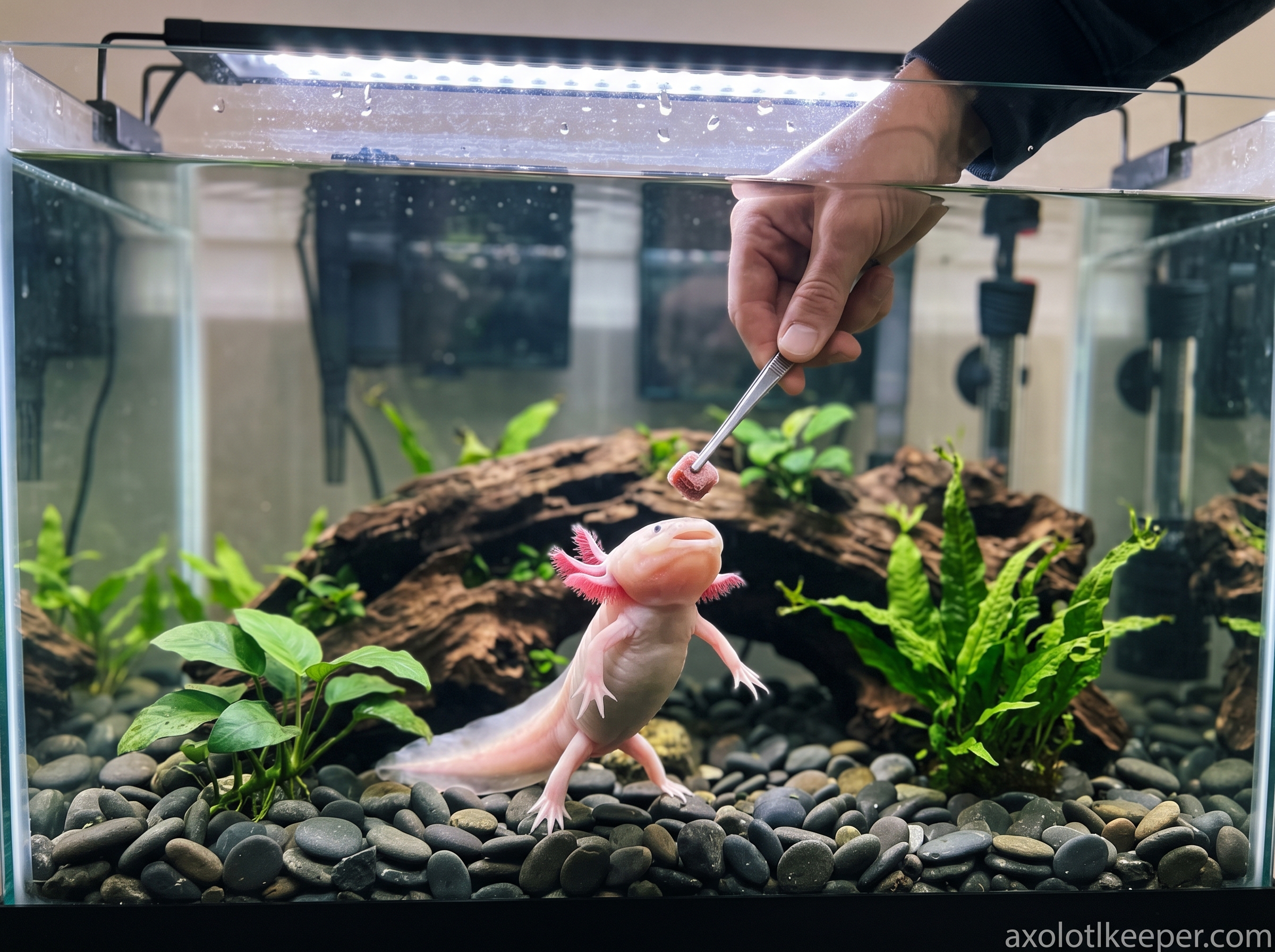
Have you ever wondered how axolotls, the charming aquatic creatures, perceive humans? Intriguingly, research reveals that these amphibians associate humans with food, creating a unique relationship that reflects their feeding behaviors and cognitive abilities. In this article, we will delve into the fascinating world of axolotls and explore how they develop this association.
Axolotls, or Ambystoma mexicanum, are known for their remarkable regenerative abilities and distinctive appearance, but their interactions with humans extend beyond mere curiosity. Understanding how axolotls connect human presence with food can provide insights into their behavior and welfare in captivity. This relationship is not only interesting but also has implications for how we care for these unique animals.
In the following sections, we will explore the reasons behind this food association, its significance, and some practical tips for axolotl owners to enhance their pets’ well-being.

The Association Between Axolotls and Humans
Axolotls are primarily aquatic creatures that thrive in freshwater environments, and their interactions with humans can be quite revealing. One of the most notable aspects of their behavior is how they associate human presence with feeding time. This association can be understood through several factors.
First, axolotls have excellent eyesight and can recognize shapes and movements, which helps them identify their food sources. Their vision allows them to discern not only the presence of food but also the person offering it. For example, when a human approaches their tank, they often anticipate a meal, leading to an interesting interaction. This visual recognition is enhanced by their ability to see in low light conditions, which is particularly beneficial in their natural habitats.
Second, axolotls can learn from experience, as they form associations based on repeated exposure to feeding routines. Over time, they come to expect that humans bring food, reinforcing this connection. This learned behavior is a key aspect of their cognitive development, showcasing their ability to adapt to their environment and the cues it presents. When owners maintain a consistent feeding schedule, axolotls begin to associate the sight of their caretaker with the promise of food, which can create a strong bond.
However, it’s important to note that this association can have both positive and negative implications for their behavior. While it can lead to healthier feeding habits, it may also result in stress if the feeding routine is disrupted. Understanding this dynamic is crucial for anyone caring for these fascinating creatures. A sudden change in the feeding schedule or environment can lead to anxiety in axolotls, highlighting the importance of stability in their care.
Understanding Axolotl Behavior
To fully grasp how axolotls associate humans with food, we need to examine their behavior in the wild and in captivity. In their natural habitat, axolotls are opportunistic feeders, mainly consuming small fish, insects, and other aquatic organisms. Their foraging behavior is driven by their need to eat regularly, which has translated into their interactions with humans. In the wild, they rely on their keen senses to locate food, and this instinct remains strong in captivity.
In captivity, when axolotls see their owners approaching, they may display excitement or increased activity, anticipating feeding. This behavior is a direct result of conditioning, where they learn that the presence of humans often correlates with food. For instance, an axolotl may swim to the front of the tank and exhibit energetic movements when it sees its owner, a clear sign of its expectation and engagement. This behavioral response is not only a reflection of their learning but also an indication of their emotional state, demonstrating how axolotls can exhibit joy and anticipation.
📖 Read also: The Surprising Truth: Can Axolotls Live with Other Fish Safely?
Furthermore, the interaction between axolotls and their owners can provide valuable insights into the animals’ mental states. Engaging with them during feeding times can enhance their socialization skills and overall well-being, indicating that these amphibians are more than just passive recipients of care. The bond between an axolotl and its owner can lead to enriched experiences for both parties, fostering a deeper understanding of animal behavior.

The Role of Conditioning
Conditioning plays a significant role in how axolotls form their associations. Classical conditioning, where an animal learns to associate a neutral stimulus (e.g., human presence) with a significant stimulus (e.g., food), is evident in axolotls. When owners consistently feed their axolotls at specific times, the animals begin to recognize these patterns, anticipating food whenever they see their caretaker.
This conditioning can be beneficial, as it encourages axolotls to be more active during feeding times, promoting their overall health. For example, axolotls that learn to associate feeding with human presence may exhibit more vigorous swimming and exploration, which are signs of a healthy and engaged animal. This active behavior not only contributes to their physical health but also stimulates their cognitive development as they navigate their environment.
However, it can also lead to dependency on humans for food, which can be detrimental if owners fail to maintain consistent feeding schedules. Inconsistent feeding can create confusion and stress for axolotls, as they rely on their learned behaviors to anticipate meals. This dependency highlights the importance of responsible pet ownership, where caregivers must be aware of the potential consequences of their feeding habits and strive to provide a stable environment for their pets.
Implications for Axolotl Care
Understanding the axolotl’s association with humans and food is essential for ensuring their well-being in captivity. Here are some practical implications for axolotl care:
- Establish a Consistent Feeding Routine: Create a regular feeding schedule that your axolotls can rely on. This consistency will help them feel secure and reduce anxiety. Regular feeding times can also allow owners to monitor their pets’ health and behavior, making it easier to spot any potential issues.
- Observe Their Behavior: Pay attention to how your axolotls react when you approach their tank. If they show signs of stress or agitation, consider adjusting the feeding routine or environment. Understanding their body language and reactions can provide insight into their emotional well-being and help you make informed decisions about their care.
- Provide a Varied Diet: Incorporate a mix of food types to keep your axolotls engaged and healthy. A varied diet can prevent boredom and promote better health. Offering different foods not only caters to their nutritional needs but also stimulates their natural hunting instincts, encouraging them to exhibit more natural behaviors.
Fascinating Facts About Axolotls
Beyond their association with food, axolotls possess many intriguing characteristics. Here are some fascinating facts about these remarkable creatures:
Regenerative Abilities
One of the most astounding features of axolotls is their ability to regenerate lost limbs, spinal cords, and even parts of their hearts and brains. This capability has made them a subject of extensive scientific research. Scientists study axolotls to understand the mechanisms behind their regenerative processes, which could have significant implications for medical science, particularly in regenerative medicine and tissue engineering.
Research has shown that axolotls can regenerate limbs with remarkable precision, regrowing bones, muscles, and nerves. This process involves complex cellular signaling and gene expression, making axolotls a valuable model for understanding regeneration. The ongoing studies aim to uncover the genetic and molecular pathways that enable such extraordinary healing, potentially leading to breakthroughs in treatments for humans.
📖 Read also: Discover How Axolotls React to Feeding Time: Fascinating Insights
Neoteny
Unlike most amphibians, axolotls retain their juvenile characteristics throughout their lives, a phenomenon known as neoteny. They remain aquatic and gilled, which is quite rare among amphibians. This unique trait allows them to thrive in environments that would typically cause other amphibians to undergo metamorphosis and transition to terrestrial life.
Neoteny not only contributes to their distinctive appearance but also impacts their reproductive strategies. Axolotls reproduce in their larval form, which is unusual among amphibians. This characteristic has fascinated scientists, as it raises questions about evolutionary adaptations and survival strategies in aquatic ecosystems. The study of neoteny in axolotls can provide insights into broader biological concepts related to development and evolution.

Variety of Colors
Axolotls come in various colors, including the wild-type (dark brown), leucistic (white with pink tones), and golden albino. This variety is often a result of selective breeding in captivity. The different colorations not only enhance their aesthetic appeal but also serve as an example of genetic variation within a species.
Color morphs in axolotls have become popular in the pet trade, leading to increased interest in their care and breeding. Understanding the genetics behind these color variations can help breeders produce specific traits while ensuring the health and vitality of the axolotls. Additionally, the study of color variation in axolotls can provide insights into the broader field of genetics and phenotypic expression.
Conclusion
In conclusion, axolotls’ ability to associate humans with food is a fascinating aspect of their behavior that reflects their intelligence and adaptability. Understanding this relationship can significantly enhance the care and well-being of these unique creatures. By recognizing their needs and behaviors, axolotl owners can provide a nurturing environment that fosters healthy relationships between humans and these remarkable animals.
Frequently Asked Questions (FAQ)
What do axolotls eat in captivity?
Axolotls typically eat a diet consisting of high-quality pellets, live or frozen foods such as worms, small fish, and brine shrimp. A varied diet is essential for their health, as it provides the necessary nutrients and keeps them engaged.
Can axolotls recognize their owners?
Yes, axolotls can recognize their owners through visual cues and associate them with feeding times, leading to a bond that can be seen in their behavior. This recognition is a testament to their cognitive abilities and enhances the owner-pet relationship.
How often should axolotls be fed?
Axolotls should generally be fed every 1-2 days, depending on their age and size. It’s important to adjust feeding frequency based on individual needs, ensuring that they receive adequate nutrition while preventing overfeeding.