
Axolotls, often referred to as “Mexican walking fish,” are fascinating amphibians known for their incredible regenerative abilities and unique swimming patterns. Understanding how these creatures swim not only sheds light on their biology but also on their behavior and habitat preferences. In this article, we will delve into the various swimming patterns of axolotls, exploring how their movements are influenced by their anatomy and environment.
Swimming is a vital activity for axolotls as it helps them navigate their aquatic habitats, hunt for food, and avoid predators. Their swimming patterns can vary significantly based on factors such as age, health, and environmental conditions. We will outline several key aspects of axolotl swimming behavior that are essential for anyone interested in these unique creatures.
The Fascinating Swimming Patterns of Axolotls
Axolotls exhibit a range of swimming patterns that are both efficient and intriguing. These patterns can be categorized into several distinct types based on their movement and purpose. Understanding these patterns can enhance our knowledge of their behavior and ecology. Below, we will explore seven notable swimming patterns of axolotls.
Gliding Swim
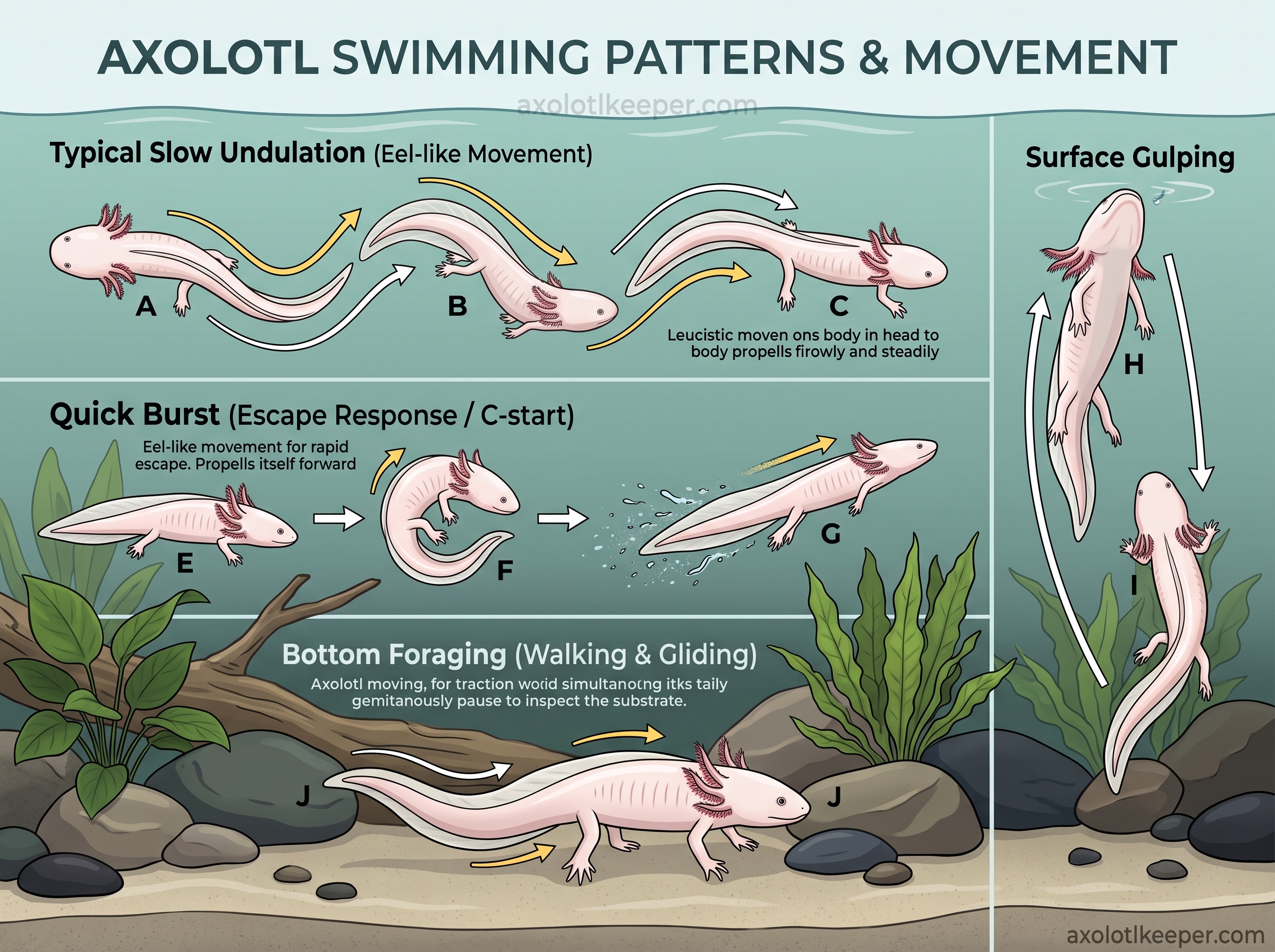
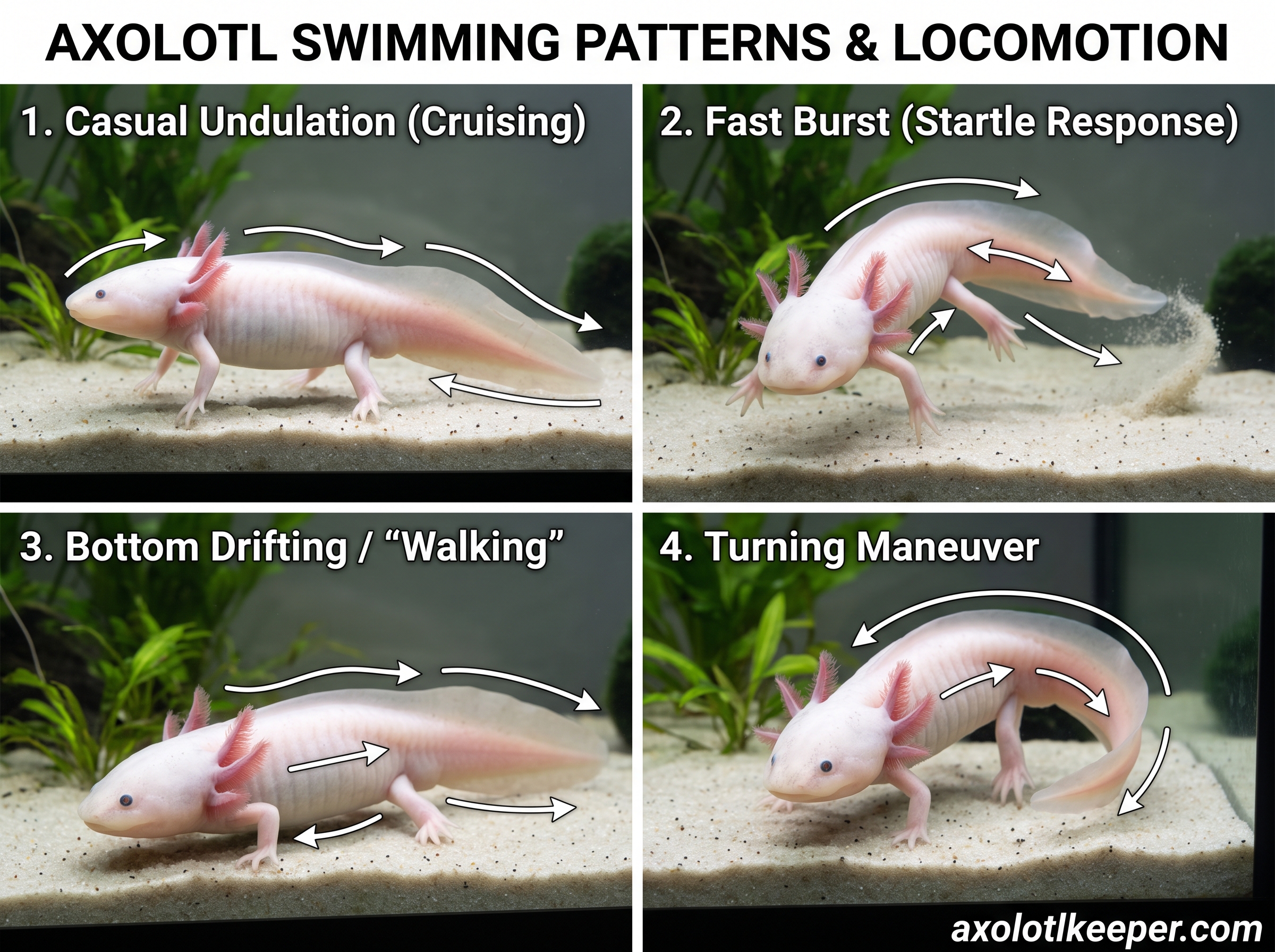
The gliding swim is characterized by smooth, effortless movements through the water. Axolotls utilize this pattern when they are not in a hurry, allowing them to conserve energy while moving gracefully. Their bodies remain relatively straight while their tails propel them forward, creating a serene swimming experience. This swimming style is particularly advantageous when they are exploring their environment or searching for food, as it allows them to move quietly and efficiently.
Additionally, the gliding swim is often observed in calm waters where axolotls feel safe and secure. This behavior not only demonstrates their comfort but also indicates their ability to adapt their swimming style based on the surrounding conditions. The energy conservation aspect of this swimming pattern is crucial for axolotls, especially since they rely heavily on their environment for sustenance.
Fast Burst Swim
In contrast, the fast burst swim is a rapid, powerful movement used primarily for escaping predators or quickly catching prey. During this swimming pattern, axolotls flex their bodies and tails vigorously, propelling themselves with significant force. This pattern showcases their agility and speed, which are crucial for survival in the wild. When faced with threats, axolotls can initiate this swimming style in a split second, demonstrating their remarkable reflexes.
The fast burst swim is also essential during competitive feeding situations, where axolotls must outpace their rivals to secure food. This behavior highlights not only their physical capabilities but also their instinctual drive to survive. Observing this pattern can provide insights into the ecological dynamics of their habitats, as it reflects the pressures axolotls face from both predators and competitors.
Hovering Swim
Hovering is a unique swimming pattern where axolotls maintain a stationary position in the water column. They achieve this by adjusting the angle of their bodies and using their gills to help stabilize themselves. This behavior is often observed when they are scanning their environment for potential food or threats. Hovering allows axolotls to remain vigilant, making it easier for them to spot movement or changes in their surroundings.
This swimming pattern can also serve as a strategic advantage when it comes to ambushing prey. By hovering quietly, axolotls can surprise unsuspecting small fish or invertebrates, making it easier to capture them. The ability to hover effectively showcases their adaptability and the importance of stealth in their hunting tactics. Moreover, this behavior can indicate the axolotl’s comfort level in its environment, as they tend to hover in areas where they feel secure.
📖 Read also: The Fascinating Behavior of Axolotls Resting on the Bottom: 7 Insights You Need to Know!
Turn and Spin
Axolotls also exhibit a playful swimming pattern that involves turning and spinning in the water. This behavior is not only entertaining but also serves a purpose in their social interactions and territorial displays. It allows them to communicate with other axolotls and establish dominance within their habitat. During these displays, axolotls may engage in circling behaviors, which can help them assess the size and strength of potential rivals.
Beyond social interactions, the turn and spin pattern can also be a way for axolotls to engage in exploratory behavior as they investigate their surroundings. This playful aspect of their swimming patterns contributes to their overall well-being and can be an essential part of their development, especially in juvenile axolotls. Understanding the social dynamics at play during these swimming patterns can provide valuable insights into the complexities of axolotl behavior.
Circular Swim
The circular swim pattern is characterized by axolotls swimming in a circular motion. This behavior is often seen during mating rituals or when they are exploring their surroundings. The circular movements can help them navigate tight spaces in their aquatic environment. In mating scenarios, this pattern can be part of courtship displays, where males may swim in circles around females to attract their attention.
Circular swimming can also serve a practical purpose when axolotls are foraging for food. By moving in a circular pattern, they can cover more ground and increase their chances of encountering prey. This behavior demonstrates their ability to adapt their swimming styles to suit different situations, whether it’s for reproduction or feeding. The versatility of the circular swim further emphasizes the importance of understanding these patterns in relation to their ecological roles.

Bottom Crawling
While not a traditional swimming pattern, bottom crawling is an important behavior for axolotls. They often crawl along the substrate using their limbs to search for food or investigate their habitat. This movement showcases their adaptability and resourcefulness as they thrive in various environments. Bottom crawling allows axolotls to access food sources that may be hidden among the substrate, such as small invertebrates or detritus.
Additionally, this behavior can be crucial for their survival in environments where water quality may fluctuate. By using their limbs to explore the bottom, axolotls can seek out areas with better conditions or find shelter from potential predators. The ability to switch between swimming and crawling demonstrates their versatility and highlights the importance of habitat complexity for their well-being.
Group Swimming
In social settings, axolotls may engage in group swimming where they swim together in a coordinated manner. This behavior can strengthen social bonds and is often seen in juvenile axolotls. Group swimming may also serve as a strategy for avoiding predators by appearing larger and more intimidating. In the wild, this social behavior can enhance their chances of survival, as predators may be less likely to target a larger group than a solitary individual.
Furthermore, group swimming can facilitate the exchange of social information among axolotls. By swimming together, they can learn from one another and develop social hierarchies. This behavior underscores the significance of social interactions in their development and survival. As researchers continue to study these social dynamics, they gain a deeper understanding of how group living affects the behavior and ecology of axolotls.
📖 Read also: Unlocking the Secrets: Do Axolotls Really Sleep?

Why Understanding Axolotl Swimming Patterns Matters
Understanding axolotl swimming patterns is crucial for several reasons. Firstly, it provides insights into their behavior and ecology, helping researchers and enthusiasts appreciate the complexity of their lives. By studying how axolotls swim, we can gain a better understanding of their daily activities, including foraging, mating, and territoriality.
Secondly, knowledge of their swimming patterns can aid in conservation efforts by informing habitat management practices that support their natural behaviors. As axolotls face threats from habitat loss and pollution, understanding their swimming patterns can help create environments that allow them to thrive. Conservation strategies that consider their behavioral ecology are essential for ensuring the survival of this unique species.
Moreover, studying these patterns can enhance our understanding of amphibian locomotion, potentially offering insights into the evolutionary adaptations of aquatic creatures. By observing how axolotls swim, scientists can draw parallels with other species and explore the evolutionary pressures that shape their movements. This research may lead to broader implications for understanding the adaptations of amphibians and other aquatic organisms.
Conclusion: The Art of Swimming in Axolotls
In conclusion, the swimming patterns of axolotls are not just fascinating to observe; they are essential for understanding the biology and ecology of these unique creatures. From gliding gracefully through the water to executing fast bursts of speed, axolotls showcase a remarkable range of behaviors that reflect their adaptability and resilience. By continuing to study and appreciate these patterns, we can deepen our understanding of axolotls and contribute to their conservation.
Frequently Asked Questions (FAQ)
What is the primary mode of swimming for axolotls?
Axolotls primarily use a combination of gliding and fast burst swimming to navigate their aquatic environment. Gliding is common during leisurely movement, while fast bursts are used for escaping threats.
Do axolotls prefer swimming alone or in groups?
Axolotls can exhibit both solitary and social swimming behaviors. While they may prefer to swim alone, group swimming can also occur, especially in juvenile axolotls during social interactions.
How do environmental factors affect axolotl swimming patterns?
Environmental factors such as water temperature, flow, and substrate can significantly influence axolotl swimming patterns. Warmer temperatures may increase their activity levels, while strong currents may necessitate different swimming strategies.
Can axolotls swim backwards?
Yes, axolotls can swim backwards using their tails. This ability allows them to maneuver effectively in their habitats, especially when navigating tight spaces or avoiding obstacles.