
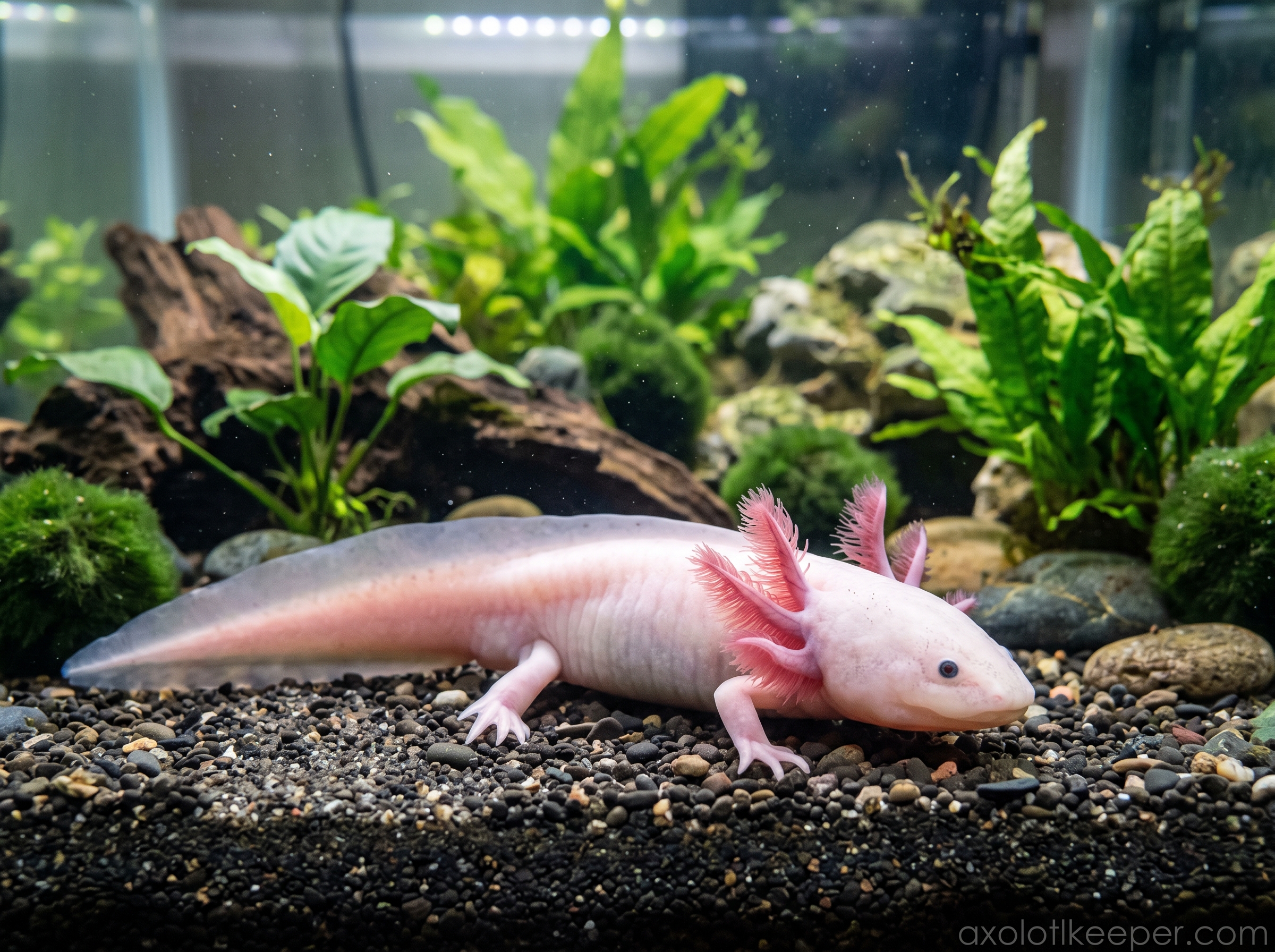
Axolotls, often called Mexican walking fish, are not just known for their remarkable regenerative abilities but also for their intriguing behavior of staying still. This unique trait is a crucial part of their survival strategy in the wild. Understanding why axolotls exhibit this behavior can give us deeper insights into their biology and their ecological niche.
In this article, we will explore the various reasons why axolotls remain motionless, how this behavior benefits them, and what it reveals about their natural habitat. By delving into the world of these fascinating creatures, we can appreciate the complexity of their existence and the delicate balance of their ecosystems.
From defense mechanisms to energy conservation, the stillness of axolotls is a multi-faceted behavior worth examining. Their ability to remain motionless is not just an intriguing characteristic but a vital part of their survival in the wild.

The Reasons Behind Axolotls Staying Still
Axolotls have developed several strategies for survival, and their ability to stay still is one of the most interesting. This behavior serves multiple purposes, essential for their existence in the wild. Here are some key reasons why axolotls may choose to remain motionless:
Predator Avoidance
One of the primary reasons axolotls stay still is to avoid detection by predators. In their natural habitat, which includes lakes and canals, remaining motionless allows them to blend into their surroundings. Their coloration often matches the substrate, making it difficult for potential predators to spot them. This camouflage is a critical evolutionary adaptation that enhances their chances of survival.
In addition to their coloration, axolotls possess a unique body shape that further aids in their concealment. Their flattened bodies and feathery gills resemble the aquatic plants found in their environment, providing an additional layer of protection. This instinctual behavior can be crucial for survival, particularly in areas where larger fish or birds are present. By staying still, axolotls can wait for the threat to pass or for an opportunity to escape.
Energy Conservation
Staying still is also a strategy for energy conservation. Axolotls, like many amphibians, have a slow metabolism. By minimizing movement, they reduce their energy expenditure, allowing them to survive in environments where food may be scarce. This adaptation is especially advantageous in their natural habitats, which can sometimes be challenging due to fluctuating resource availability.
During periods of low activity or when food resources are limited, axolotls can enter a state of reduced metabolic function, effectively slowing down their bodily processes. This energy-saving tactic enables them to optimize their energy use while they wait for prey to come within reach. It also prolongs their survival during times when food is not readily available, showcasing their remarkable adaptability to environmental changes.
Feeding Strategy
Interestingly, the stillness of axolotls also plays a role in their feeding strategy. These creatures are opportunistic feeders, and their hunting technique often involves remaining motionless until prey, such as small fish or worms, comes close enough to capture. Their ability to stay still and wait patiently can increase their chances of a successful hunt.
📖 Read also: Unveiling the Fascinating Journey of Axolotls in Their New Tank
By blending into their environment and remaining undetected, axolotls can ambush their prey effectively, making their stillness an essential aspect of their feeding behavior. This ambush strategy allows them to catch unsuspecting organisms that venture too close, capitalizing on their stealthy approach. Additionally, their unique feeding mechanism, which involves a rapid suction feeding technique, means that remaining still until the precise moment of attack is crucial for their hunting success.

Understanding the Ecological Impact of Axolotl Behavior
The behavior of axolotls staying still is not only fascinating but also has significant implications for their ecological role. As both predators and prey, their behavior affects the balance within their ecosystems. Understanding these dynamics can highlight the importance of conservation efforts for these unique creatures.
Role in the Food Chain
As ambush predators, axolotls help regulate populations of smaller aquatic organisms. Their stillness allows them to maintain a crucial position in the food chain, ensuring that they can effectively hunt while also being a food source for larger predators. This balance is vital for maintaining biodiversity in their habitats. In many ecosystems, the presence of predators like axolotls helps to control the populations of smaller fish and invertebrates, preventing overpopulation and promoting a healthy ecological balance.
Furthermore, axolotls are also preyed upon by larger fish and birds, which highlights their role in the food web. Their ability to remain still not only aids their survival as predators but also reinforces their position as a vital food source for other species. This interconnectedness illustrates the delicate balance within aquatic ecosystems, where every species plays a critical role.
Influence on Habitat Health
Axolotls contribute to the health of their aquatic environment. By preying on smaller fish and invertebrates, they help control algae growth and keep the ecosystem balanced. Their behavior of staying still allows them to be efficient hunters, which in turn helps sustain the health of their habitat. By regulating the populations of certain species, axolotls play a key role in preventing issues such as algal blooms, which can lead to oxygen depletion and negatively affect other organisms in the water.
Moreover, the interactions between axolotls and their prey can influence the composition of the aquatic community. As they consume various species, they help maintain diversity among the organisms in their environment. This dynamic interplay contributes to the overall ecological stability, demonstrating how the stillness of axolotls is not only a survival tactic but a fundamental aspect of the ecosystem’s health.

Indicator Species
As an indicator species, the health of axolotl populations can reflect the overall health of their environment. By studying their behavior, including their tendency to stay still, researchers can gain insights into the ecological state of their habitats. Changes in their behavior may indicate shifts in environmental conditions, prompting further investigation and conservation measures. For instance, an increase in stillness might signal stress due to pollution or habitat degradation, while a sudden change in their movement patterns could suggest alterations in prey availability.
Monitoring axolotl populations provides valuable data for conservationists and ecologists. Understanding their stillness and its implications can help identify environmental threats, leading to targeted conservation efforts. As indicators of ecological health, axolotls serve as a crucial component in the assessment of aquatic ecosystems, underscoring the need for ongoing research and habitat protection.
Common Misconceptions About Axolotls
Despite their popularity, there are several misconceptions surrounding axolotls, particularly regarding their behavior. Addressing these myths can help foster a better understanding of these unique creatures.
📖 Read also: Unlocking the Mysteries of Axolotl Swimming Patterns
Myth: Axolotls are Always Active
Many people assume that axolotls are constantly active due to their playful appearance. In reality, their behavior can be quite the opposite. Their tendency to stay still is a natural and beneficial adaptation, not a sign of lethargy or illness. Understanding their natural behavior allows us to appreciate the complexities of their lifestyle.
In fact, axolotls may exhibit periods of increased activity, especially during feeding times or in response to environmental changes. However, their overall behavior is characterized by moments of stillness, which are integral to their survival. Recognizing this aspect of their behavior can help dispel the myth that axolotls are always on the move.
Myth: Stillness Means Stress
Another common misconception is that if an axolotl is staying still, it is stressed or unwell. While stress can lead to changes in behavior, stillness is often a normal part of their behavior, especially when they are in a safe environment. It’s essential to observe their overall health and habitat conditions before jumping to conclusions.
In their natural habitats, axolotls frequently exhibit periods of stillness, especially when conditions are favorable. This behavior is not indicative of distress but rather a reflection of their adaptive strategies. Understanding the context of their stillness can help clarify misconceptions and promote better care practices for those who keep them as pets.
Myth: Axolotls are Easy Pets
Finally, some believe that keeping axolotls as pets requires minimal care. While they may seem low-maintenance due to their stillness, axolotls require specific water conditions, diet, and habitat to thrive. Understanding their natural behaviors can help potential owners provide better care.
For instance, axolotls need a well-maintained tank with clean water, appropriate temperatures, and a varied diet to ensure their health. Their stillness should not be mistaken for a lack of need for care; rather, it highlights the importance of creating a suitable environment for them. Educating potential owners about the complexities of axolotl care can lead to healthier pets and a better appreciation for these remarkable creatures.
Conclusion
The stillness of axolotls is a remarkable aspect of their behavior that plays a crucial role in their survival and ecological impact. From predator avoidance to energy conservation, this unique trait illustrates the complexities of their existence. By understanding the reasons behind their behavior, we can appreciate the delicate balance of their ecosystems and the importance of conservation efforts for these extraordinary creatures.
As we continue to study axolotls, we can uncover more about their fascinating lives and the intricate relationships they maintain within their environments. The stillness of axolotls is not merely a behavior but a vital adaptation that showcases the beauty and complexity of life in aquatic ecosystems.