
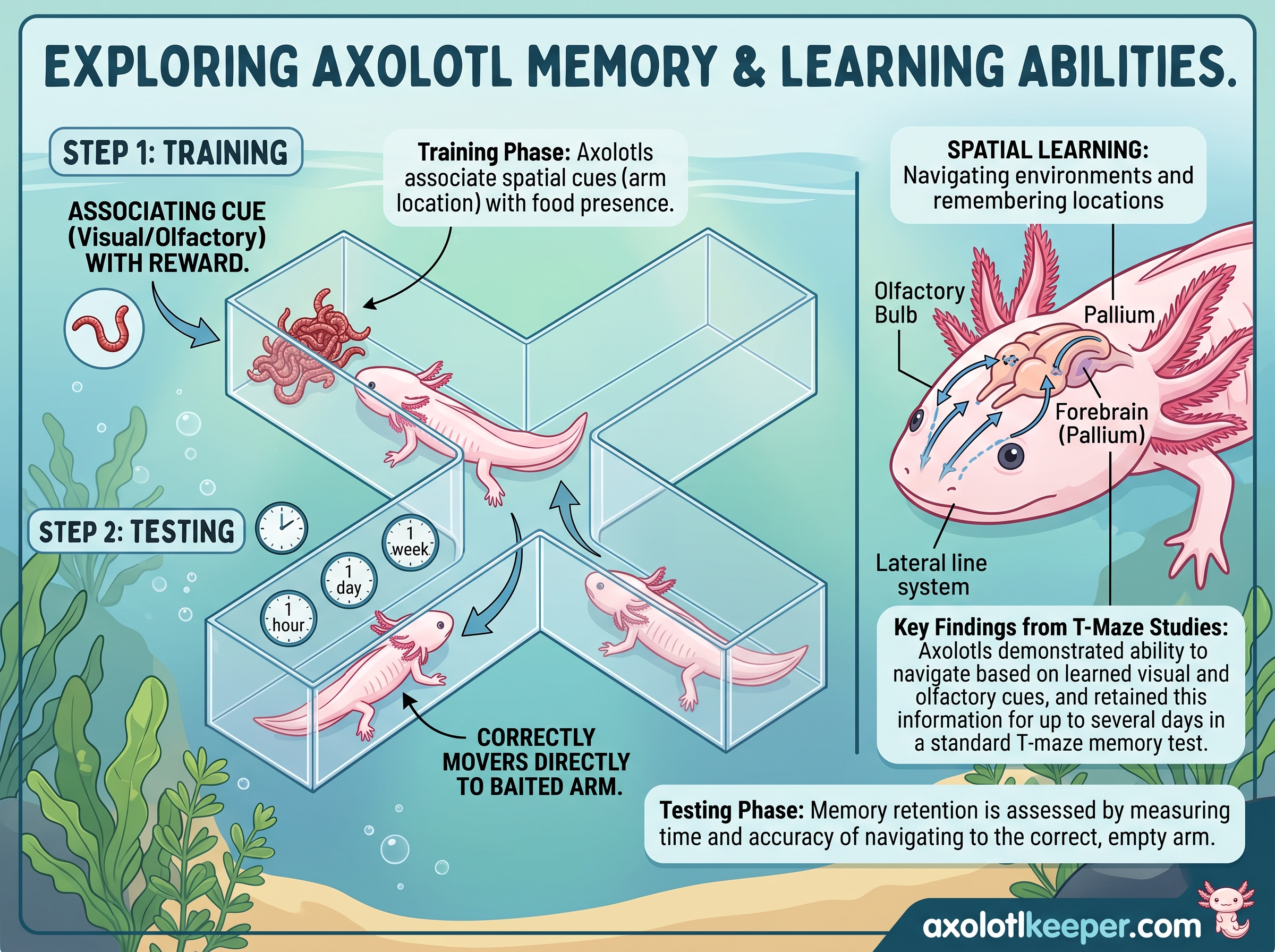
The axolotl, a fascinating aquatic creature known for its regenerative abilities, also possesses intriguing memory capabilities that have sparked the interest of scientists and enthusiasts alike. Understanding the memory ability of axolotls can provide insights not only into their behavior but also into broader biological processes that relate to memory and learning in other species. This article delves into the unique aspects of axolotl memory, shedding light on what makes these creatures so remarkable.
Recent studies have shown that axolotls are capable of learning and retaining information, particularly regarding their environment. This ability is crucial for their survival, allowing them to navigate and avoid predators effectively. By exploring how axolotls process and remember information, we can gain a better understanding of the evolutionary significance of memory in amphibians.
In this article, we will explore various facets of axolotl memory ability, including its significance, the mechanisms behind it, and what it means for our understanding of memory in the animal kingdom. Let’s dive into the remarkable world of axolotl cognition!

Understanding Axolotl Memory Ability
Memory in axolotls is a topic that combines aspects of neuroscience, behavior, and evolutionary biology. These creatures exhibit a form of memory that allows them to recognize their surroundings and respond to various stimuli. This capacity for memory is essential for their daily activities, including feeding and mating. The ability to identify food sources, avoid predators, and interact with their environment showcases their cognitive sophistication.
Research indicates that axolotls can recall information related to their environment and specific experiences. For example, they can learn to associate certain cues with food availability or potential dangers. This learning process is not just instinctual but involves a level of cognitive processing that is fascinating to study. The memory capacity of axolotls can be compared to that of other amphibians, and understanding these differences can reveal how evolutionary pressures shape cognitive abilities across species.
The axolotl’s ability to remember can be attributed to its brain structure and neural pathways. The telencephalon, which is involved in memory and learning, plays a crucial role in how these animals process experiences. Understanding these mechanisms is crucial for scientists as it may provide insights into memory functions in higher vertebrates, including humans. The study of axolotl memory not only enhances our understanding of their unique adaptations but also sheds light on the fundamental principles of memory across different species.
Neural Mechanisms of Memory
The axolotl’s brain is relatively simple compared to mammals, yet it still exhibits complex functions. The neural mechanisms involved in memory formation and retrieval in axolotls involve various brain regions, including the telencephalon and the optic tectum. These areas are known to play significant roles in processing sensory information and forming memories. The telencephalon is particularly interesting because it is responsible for higher cognitive functions, and studying its structure can reveal how simpler brains manage complex tasks.
Studies have shown that when axolotls are exposed to specific stimuli repeatedly, their neural pathways strengthen, leading to improved memory retention. This synaptic plasticity is a fundamental aspect of memory formation, highlighting the adaptability of the axolotl’s brain. For instance, through operant conditioning, axolotls can learn to navigate towards a food source when they hear a specific sound, demonstrating their ability to form associative memories.
Furthermore, the regenerative capabilities of axolotls may also extend to their neural pathways, allowing for continued learning and memory formation throughout their lives, which is a unique trait among amphibians. This regenerative property could enable them to recover from injuries that might otherwise impair cognitive functions, suggesting a fascinating link between brain health and memory retention. Understanding these neural mechanisms is not only vital for comprehending axolotl behavior but also provides a model for exploring memory and regeneration in other species.
📖 Read also: Unveiling the Mysteries: What is the Intelligence Level of Axolotls?
Behavioral Evidence of Memory
Behavioral experiments provide compelling evidence of axolotl memory abilities. For instance, researchers have conducted tests where axolotls are trained to associate specific sounds or lights with feeding times. These experiments demonstrate that axolotls can remember these associations for extended periods, indicating a robust memory system. Such behavioral studies are crucial as they help establish a direct link between memory processes and observable actions, enriching our understanding of how axolotls interact with their environment.
Additionally, studies involving environmental enrichment show that axolotls exposed to varied stimuli exhibit better problem-solving skills and memory retention than those in more monotonous settings. This suggests that stimulating environments can enhance cognitive functions and memory in these creatures. For example, axolotls placed in enriched environments with diverse objects and companions showed improved performance in tasks that required spatial navigation and memory recall compared to those kept in barren tanks.
Such findings not only underscore the axolotl’s memory capabilities but also open avenues for further research on how environmental factors influence learning and memory in amphibians. By understanding the conditions that promote cognitive development in axolotls, researchers can apply these insights to conservation efforts and habitat restoration, ensuring that these remarkable creatures thrive in their natural settings.

Implications for Broader Research
The study of axolotl memory ability has significant implications for the broader field of neuroscience and animal behavior. By investigating how these creatures learn and remember, researchers can draw parallels to memory functions in other species, including mammals. These comparisons are critical as they provide deeper insights into the evolutionary history of cognitive functions and how different species have adapted their memory systems for survival.
Understanding the evolutionary aspects of memory can provide insights into how different species have adapted their cognitive abilities for survival. This knowledge is crucial for conservation efforts and enhancing our understanding of biodiversity. For instance, if certain memory traits are found to be advantageous in specific environmental contexts, this could inform strategies for preserving those habitats and the species that depend on them.
Moreover, the axolotl serves as a model organism for studying regeneration and neural development, making it a valuable subject in scientific research. Insights gained from axolotl memory studies may lead to advancements in treating memory-related disorders in humans. By exploring the neural pathways and mechanisms that allow axolotls to retain memories, researchers could uncover potential therapeutic targets that could be relevant in treating cognitive impairments in higher vertebrates.
Interesting Facts About Axolotl Memory
As we explore the memory capabilities of axolotls, several interesting facts emerge that highlight their unique cognitive abilities. Here are some key points to consider:
- Axolotls can remember specific food sources and will return to those locations even after extended periods. This behavior illustrates their spatial memory and ability to recall past experiences.
- They demonstrate the ability to recognize other axolotls, which is essential for social interactions and mating. Recognition can be crucial for maintaining social structures within their populations.
- Research shows that axolotls can learn to navigate mazes, indicating spatial memory capabilities similar to those seen in more complex animals. Such capabilities are indicative of higher cognitive functions, suggesting that axolotls possess a more sophisticated understanding of their environment than previously thought.
These fascinating aspects of axolotl memory not only showcase their intelligence but also emphasize the importance of further research in this area. As scientists continue to uncover the complexities of axolotl cognition, we may find that these creatures hold keys to understanding broader neurological principles.
📖 Read also: The Fascinating Stillness of Axolotls: Nature’s Unique Adaptation
Conclusion
The memory ability of axolotls is a captivating subject that combines various scientific disciplines. Their capacity to learn and remember plays a vital role in their survival and adaptation to their environment. Understanding these abilities not only enhances our knowledge of axolotls but also contributes to our broader understanding of memory in the animal kingdom. The implications of this research extend beyond just axolotls, offering valuable insights into evolution, behavior, and even potential clinical applications.
As researchers continue to study these intriguing creatures, we can anticipate further discoveries that may unlock even more secrets about memory, cognition, and the fascinating world of amphibians. The axolotl is not just a remarkable creature for its regenerative properties but also for its memory abilities that continue to intrigue scientists and animal lovers alike.
Through ongoing research, we may uncover the intricate connections between memory, learning, and survival, ultimately enriching our understanding of how diverse life forms navigate their worlds.
Frequently Asked Questions (FAQ)
What is an axolotl?
An axolotl is a type of salamander that remains in its larval form throughout its life, retaining its gills and aquatic lifestyle. They are known for their remarkable regenerative abilities.
How do axolotls learn?
Axolotls learn through conditioning, where they associate specific stimuli with rewards or threats, allowing them to remember and adapt their behavior accordingly.
Can axolotls recognize each other?
Yes, axolotls can recognize other axolotls, which is important for social interactions and mating behaviors.
Why is studying axolotl memory important?
Studying axolotl memory can provide insights into the evolution of cognitive abilities and may have implications for understanding memory disorders in other species, including humans.