
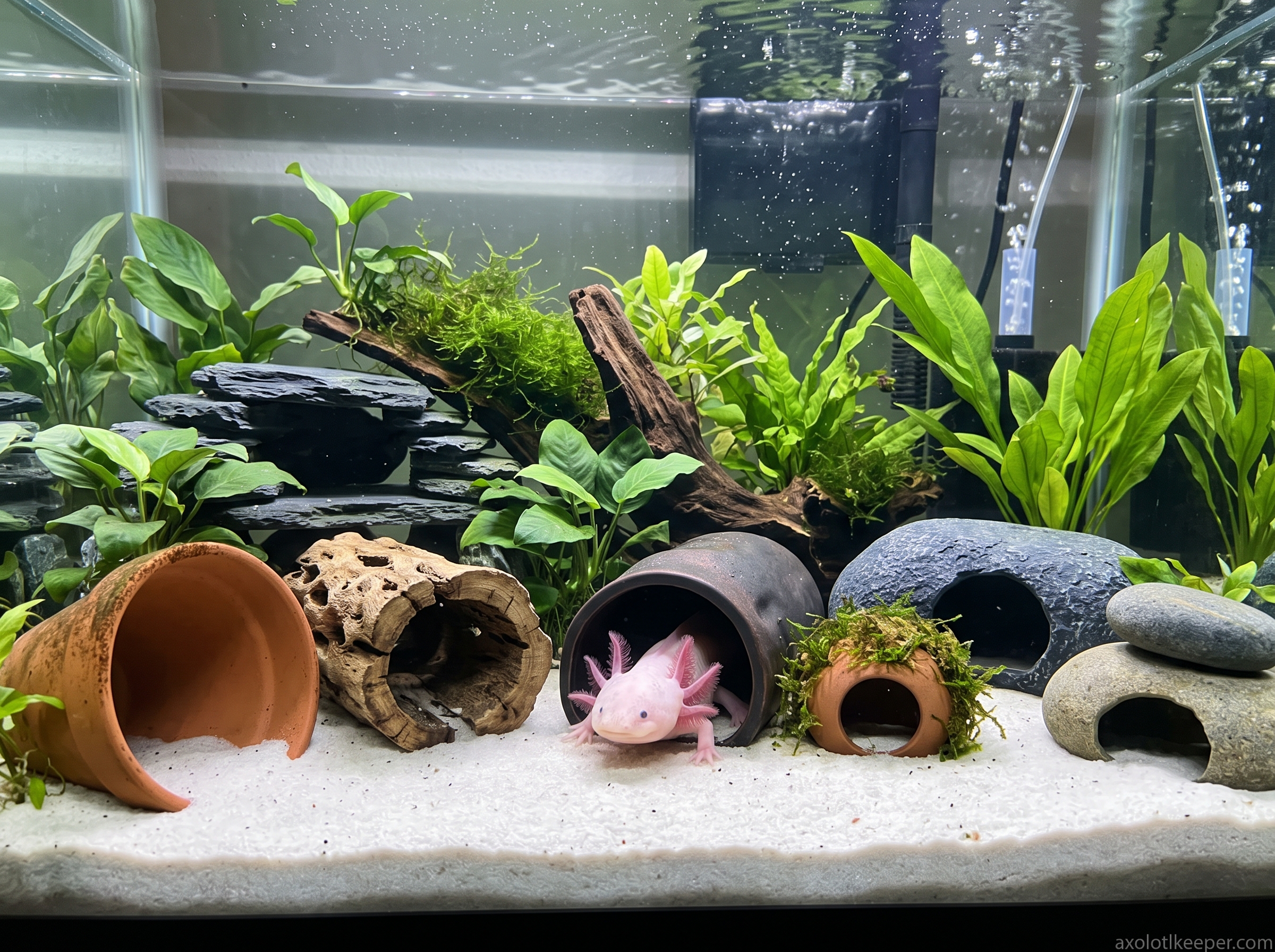
Axolotls, the charming aquatic creatures known for their regenerative abilities, have a unique set of adaptations that help them survive in their natural habitat. One of the most intriguing aspects of axolotl behavior is how they hide from predators. Understanding these hiding techniques not only enhances our appreciation for these extraordinary animals but also sheds light on their ecological role.
In this article, we will explore five fascinating ways axolotls hide from potential threats in their environment. Each method showcases the axolotl’s remarkable adaptations and clever survival strategies.

The Natural Habitat of Axolotls and Their Hiding Techniques
Before diving into the hiding techniques, it’s essential to understand the axolotl’s natural habitat. Native to the lake complex of Xochimilco near Mexico City, axolotls thrive in freshwater environments characterized by shallow waters, abundant vegetation, and a rich ecosystem. These conditions provide both shelter and food, making it a perfect home for the axolotl.
These natural features play a critical role in how axolotls employ their hiding techniques. The blend of shallow waters and dense vegetation not only offers ample opportunities for hiding but also facilitates a rich food web where axolotls can thrive. Additionally, the specific characteristics of their habitat can change with seasons, thus influencing their hiding strategies.
Importance of Vegetation in Axolotl Hiding
In their habitat, axolotls rely heavily on submerged plants and weeds for camouflage. The dense vegetation not only offers a hiding spot from predators but also serves as a hunting ground for small fish and insects, which are crucial for their diet. This dual functionality of vegetation highlights its importance in the axolotl’s survival.
Moreover, the type of vegetation can vary, providing different levels of cover. For instance, thicker plants may provide better concealment against larger predators, while thinner plants could allow for ambushing smaller prey. Thus, the axolotl’s effective hiding largely depends on the variety of vegetation present in their environment.

Water Clarity and Depth: Key Factors in Hiding
The clarity and depth of the water also play a significant role in their hiding techniques. Shallow waters allow for easy access to hiding spots while still providing enough cover for ambushing prey. The murkiness of the water can further enhance their concealment, making it harder for predators to spot them.
In clear waters, axolotls must rely more on their camouflage to remain undetected, while in murky conditions, they can use the environment to their advantage to hide more effectively. Therefore, water clarity not only influences the axolotl’s hunting methods but also directly affects their ability to evade predators.
Seasonal Changes and Their Impact on Hiding Strategies
Seasonal variations in their habitat can also affect how axolotls hide. During the rainy season, increased water levels can lead to more submerged plants, providing additional cover. Conversely, during dry spells, they might rely on specific areas of vegetation that remain lush. This adaptability to seasonal changes illustrates the axolotl’s resilience and survival instincts.
Furthermore, seasonal changes can affect the types of predators in the area as well as the availability of prey, which may lead to shifts in the axolotl’s hiding strategies. For instance, in the dry season, when certain fish may migrate or become less active, axolotls may adjust their hiding spots accordingly to ensure they remain safe from potential threats.

Camouflage: Blending with the Environment to Avoid Detection
One of the primary ways axolotls avoid detection is through camouflage. Their skin color, which ranges from dark brown to light pink, allows them to blend seamlessly with their surroundings. This ability to camouflage is vital for their survival as it enables them to evade predators effectively.
Camouflage not only aids in avoiding predation but also enhances their hunting tactics. By blending into their environment, axolotls can ambush unsuspecting prey. This dual purpose of camouflage is a key reason why it’s such a developed trait in these creatures.
Color Adaptation: A Dynamic Defense Mechanism
Axolotls can adjust their skin pigmentation based on their environment. For instance, in darker waters, they may appear darker, while in lighter environments, they may become paler. This adaptive coloration is crucial for avoiding predation and showcases the axolotl’s ability to respond to environmental changes.
This dynamic adaptation is not just a passive trait; it involves complex biological processes that allow axolotls to modify their skin pigments as needed. This responsiveness can be vital in environments where light conditions fluctuate, such as during different times of the day or in varying weather conditions.
Texture and Patterns: Nature’s Camouflage
In addition to color, the texture of their skin can also help them blend in. The rough, bumpy surface of their skin mimics the appearance of rocks and plants, making them less noticeable to predators. This textural adaptation works in tandem with their color changes to enhance their overall camouflage.
The patterns and texture on their skin can also confuse predators, making it difficult to distinguish them from their surroundings. This evolutionary trait highlights the axolotl’s long history of adaptation to its environment, providing an essential layer of protection against potential threats.
📖 Read also: 6 Surprising Substrates Axolotls Can’t Eat and Why They Matter
Behavioral Camouflage: Staying Still to Survive
Besides physical adaptations, axolotls exhibit behavioral camouflage. They often remain motionless for extended periods, mimicking the stillness of their environment. This behavior can be particularly effective against visual predators, as sudden movements can attract attention.
By adopting a still posture, axolotls take advantage of their environment’s natural elements, further enhancing their chances of not being detected. This behavior is instinctual and reinforces the axolotl’s overall strategy of avoiding predation through both physical and behavioral means.

Hiding in Substrates: Utilizing the Ground for Safety
Axolotls are known to utilize substrates, such as sand or gravel, to hide from potential threats. By burrowing or positioning themselves within these materials, they can evade detection. This behavior is particularly advantageous in environments where vegetation may be sparse.
Substrate hiding allows axolotls to quickly burrow away from danger, providing an immediate escape route. This ability to utilize the substrate for concealment is a critical survival strategy that reflects their adaptability in various conditions.
Burrowing Techniques: A Quick Escape
When feeling threatened, axolotls may use their bodies to dig into the substrate. This behavior not only provides immediate cover but also allows them to escape quickly if necessary. The speed at which they can burrow into the ground is impressive and shows their instinctual response to danger.
Burrowing serves a dual purpose: it protects them from predators while also helping to regulate their body temperature and maintain moisture levels. This multifaceted use of substrate highlights the importance of having a suitable environment for axolotls to thrive.
Choosing the Right Substrate: Maximizing Concealment
The choice of substrate is crucial for effective hiding. Sand is often preferred as it is easy to move and allows for better concealment. In contrast, larger gravel may not provide the same level of cover, leaving axolotls vulnerable to predation.
Moreover, different types of substrates can influence the behavior of axolotls. For instance, softer substrates can encourage more burrowing behavior, while harder substrates may lead to more surface-level hiding. Understanding these preferences is essential for anyone looking to create an ideal habitat for axolotls, whether in the wild or in captivity.
Environmental Interactions Affecting Hiding Ability
Interactions with their environment can also affect their ability to hide. For example, strong currents or disturbances in the water may expose them, forcing them to seek refuge in quieter areas. This adaptability to changing conditions is crucial for their long-term survival.
In addition, the presence of other aquatic organisms can influence axolotl hiding strategies. For example, if larger fish are present, axolotls may become more cautious and rely more heavily on substrate hiding or seeking shelter in vegetation, showcasing their ability to adapt to the dynamics of their ecosystem.

Utilizing Structures for Shelter: Natural and Artificial Hiding Spots
Axolotls also take advantage of structures in their environment, such as rocks, logs, and artificial decorations in captivity, to hide from predators. These structures provide additional layers of protection and are crucial for their survival.
The use of natural structures not only aids in hiding but also offers axolotls a sense of security, enabling them to thrive in their habitat. This ability to find shelter among natural formations illustrates the adaptability and resourcefulness of axolotls in the wild.
Natural Structures: The Role of Rocks and Logs
In their natural habitat, axolotls often seek shelter under rocks or submerged logs. These natural structures not only conceal them from predators but also create microhabitats that can enhance their survival. The stability and complexity of these structures provide essential hiding spots that promote their well-being.
Furthermore, these natural shelters can also serve as breeding grounds or resting areas, showcasing their multifunctional use. The presence of such structures in their environment is vital for maintaining healthy axolotl populations.
Artificial Structures in Captivity: Mimicking the Wild
In captivity, providing axolotls with hiding spots, such as caves or ornamental plants, is essential for their well-being. These structures mimic their natural environment and help reduce stress. Stress reduction is crucial for axolotls, as high-stress levels can lead to health issues.
Creating a habitat that includes various hiding spots allows axolotls to exhibit their natural behaviors, contributing to their overall health and happiness. Therefore, understanding the importance of these structures in captivity is essential for responsible axolotl care.
📖 Read also: 5 Essential Reasons to Choose Axolotl Sand Substrate for Your Tank
Community Dynamics: Interactions with Other Species
In the wild, axolotls may also use the presence of other species to enhance their hiding strategies. For instance, being among schools of fish can provide additional cover from larger predators. This communal aspect of hiding is an interesting behavior that reflects the complex interactions within aquatic ecosystems.
Additionally, observing the behaviors of other species can provide axolotls with cues regarding safety. For example, if nearby fish exhibit signs of distress, axolotls may take this as a warning to seek shelter, showcasing their awareness and adaptability to their surroundings.
Behavioral Adaptations: Staying Alert to Survive
Finally, axolotls exhibit behavioral adaptations that enhance their ability to hide effectively. Their alertness and quick responses to potential threats are critical for their survival. This behavioral aspect complements their physical adaptations and plays a significant role in their overall strategy to avoid predation.
The combination of their physical and behavioral adaptations creates a well-rounded approach to survival, demonstrating the resilience of axolotls in their natural habitat.
Vigilance and Awareness: The Key to Survival
Axolotls are naturally cautious creatures. They often display heightened awareness of their surroundings, making them quick to retreat into hiding when sensing danger. This vigilance is reinforced by their keen senses, particularly sight and smell. Their ability to detect potential threats allows them to react quickly, increasing their chances of survival.
Moreover, their heightened awareness can also lead to more effective hunting strategies. By being alert to their environment, axolotls can better position themselves to ambush prey, showcasing their adaptability in both hunting and hiding.
Social Behavior and Its Influence on Hiding
While axolotls are generally solitary, their interactions with other members of their species can influence their hiding behavior. Observing the reactions of others can provide clues about potential threats. This social awareness is an interesting aspect of their behavior that adds another layer to their survival strategies.
By being attuned to the behaviors of other axolotls, they may be able to enhance their own hiding techniques and make informed decisions about when to hide or when to venture out. This social dynamic is an essential factor in their overall survival in the wild.
Stress Responses: Indicators of Environmental Safety
When under stress, axolotls may exhibit specific behaviors, such as rapid movements or erratic swimming. These responses can help them evade predators but may also indicate the need for more hiding options in their environment. Understanding these stress responses can provide insights into the well-being of axolotls and the effectiveness of their hiding strategies.
Moreover, chronic stress can lead to negative health outcomes, highlighting the importance of providing adequate hiding spots and a secure environment for axolotls in both wild and captive settings. Proper care and habitat design are essential for ensuring their long-term survival.
In conclusion, axolotls have developed a range of fascinating techniques to hide from predators, from utilizing camouflage and substrates to taking advantage of natural and artificial structures. Understanding these behaviors not only highlights the resilience of these unique creatures but also underscores the importance of preserving their natural habitats for future generations. By appreciating how axolotls hide, we can contribute to their conservation and ensure that these remarkable beings continue to thrive.
Frequently Asked Questions (FAQ)
What do axolotls use for hiding?
Axolotls use various methods for hiding, including camouflage, substrates like sand, and natural structures such as rocks and logs.
How does camouflage help axolotls?
Camouflage allows axolotls to blend in with their environment, making it difficult for predators to spot them.
Can axolotls hide in captivity?
Yes, axolotls can hide in captivity if provided with adequate hiding spots, such as caves or plants, which mimic their natural habitat.
Why is it important for axolotls to hide?
Hiding is crucial for axolotls as it helps them avoid predation, ensuring their survival in the wild.