

Axolotls, often referred to as Mexican walking fish, are captivating creatures that have piqued the interest of biologists and pet enthusiasts alike. These unique amphibians are not only fascinating due to their appearance but also because of their incredible regenerative abilities and peculiar behaviors. In this article, we will explore ten fun facts about axolotls that will leave you amazed and eager to learn more about these extraordinary animals.
What is an Axolotl?
Before diving into the fun facts, it’s essential to understand what axolotls are. Scientifically known as Ambystoma mexicanum, axolotls are a type of salamander that remains in its larval form throughout its life, a phenomenon known as neoteny. Unlike typical amphibians that undergo metamorphosis, axolotls retain their gills and aquatic lifestyle even as adults. This trait makes them unique among their relatives and contributes to their charm.
Axolotls are native to the lake complex of Xochimilco in Mexico City, where they inhabit canals and lakes. Unfortunately, due to habitat loss and pollution, they are now considered critically endangered in the wild. This fact alone underscores the importance of conservation efforts for this incredible species. Conservationists are working tirelessly to preserve their natural habitats and to educate the public about the threats they face.

Appearance and Color Variations
One of the most striking features of axolotls is their appearance. They have a wide head, lidless eyes, and feathery external gills that give them a whimsical look. These external gills are not just for show; they are essential for respiration, allowing axolotls to absorb oxygen directly from the water. Axolotls come in various colors, ranging from the wild type (dark with golden flecks) to leucistic (pale pink with red gills), albino (white with pink hues), and golden variants. Each color variation not only makes them visually appealing but also contributes to their popularity among pet owners.
Their unique coloration can also play a role in their survival. In the wild, darker axolotls may blend in better with the muddy lake bottoms, while lighter variations can be easier to spot by predators. This gives rise to fascinating discussions about how color variations can affect their chances of survival and reproduction in their natural habitat.
Regenerative Abilities
Axolotls are renowned for their remarkable regenerative capabilities. They can regrow entire limbs, parts of their heart, and even sections of their brain without scarring. This remarkable ability to regenerate has made them a subject of scientific research, as understanding their regeneration process could lead to breakthroughs in regenerative medicine for humans. Researchers are particularly interested in the molecular and cellular processes behind this regeneration, as it could have significant implications for treating injuries and diseases in humans.
Studies have shown that axolotls can regenerate limbs with an astonishing level of precision. For example, if an axolotl loses a limb, it can regrow a new one that is structurally identical to the original. This includes not just bones but also muscle, skin, and nerves. Understanding how axolotls achieve this level of precision could inspire new medical techniques for limb regeneration in humans, a field that has long been the subject of science fiction.
Social Behavior
In the wild, axolotls are generally solitary creatures. However, they can exhibit social behaviors when kept in groups in captivity. They communicate through body language, such as changes in posture and movement, and their interactions can be quite intriguing. For instance, when axolotls feel threatened, they may display a defensive posture by arching their backs or retreating to a hiding spot. In contrast, during feeding times, they may become more active and engage in competitive behaviors, which can help researchers understand their social dynamics better.
It’s important to note that keeping axolotls in a group requires careful monitoring, as they can become aggressive towards one another, especially during feeding times. Aggression can manifest in various ways, including biting or pushing other axolotls away from food. Therefore, if you are considering keeping multiple axolotls, providing ample space and hiding spots is crucial to minimize stress and potential conflict.
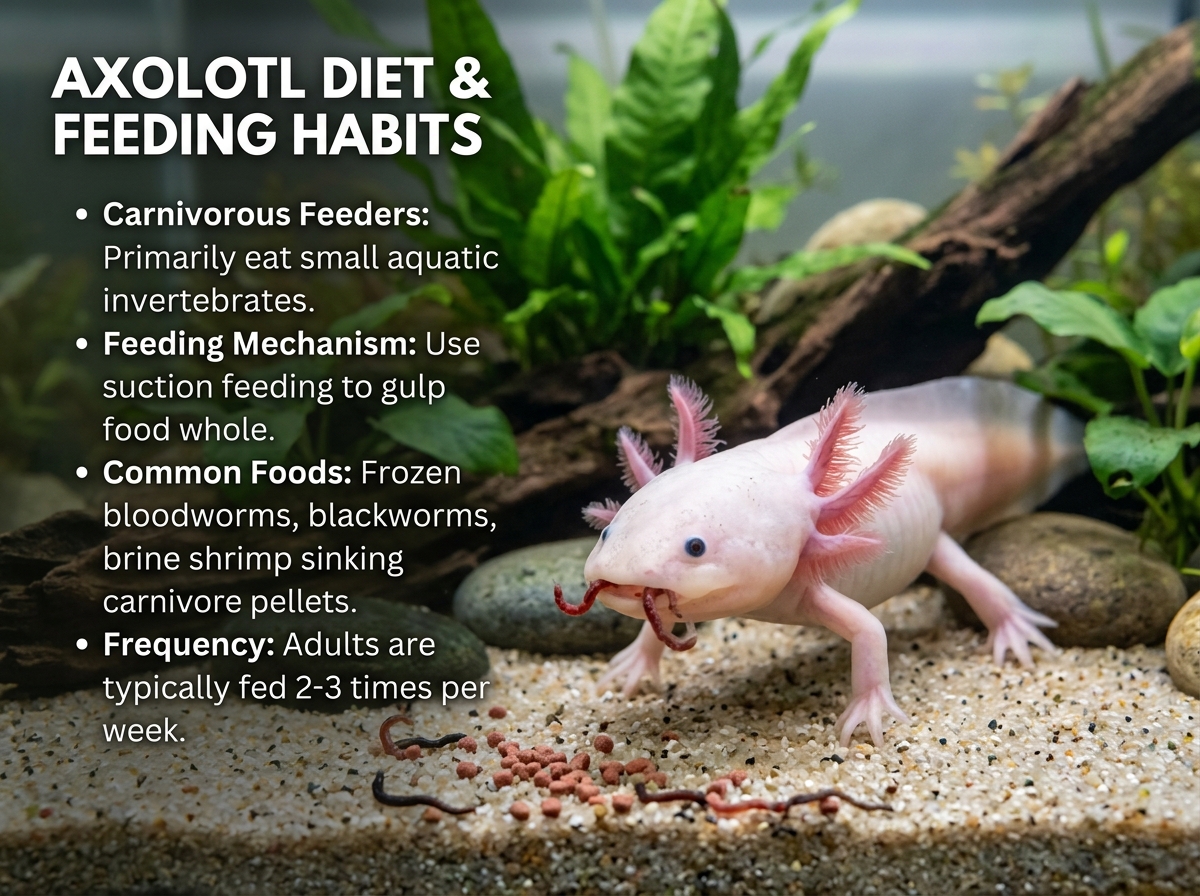
Diet and Feeding Habits
Axolotls are carnivorous and have a diet that primarily consists of worms, insects, and small fish. In captivity, they can be fed specialized pellets, live food, or frozen options to ensure they receive the necessary nutrients for healthy growth. Their feeding habits are fascinating; they use a suction feeding technique to capture prey, which involves creating a vacuum with their mouths. This method is efficient and helps them quickly consume food, which is essential in the wild where competition for food can be fierce.
In addition to worms and insects, axolotls can benefit from a varied diet that includes high-quality pellets specifically formulated for aquatic salamanders. These pellets are designed to provide balanced nutrition that supports their growth and overall health. It’s essential for owners to understand the nutritional needs of axolotls and to adjust their feeding practices accordingly as the axolotl matures.
📖 Baca juga: How Long Do Axolotls Live? Discover the Secrets Behind Their Lifespan!
Feeding Frequency
For optimal health, axolotls should be fed 2-3 times a week, depending on their age and size. Juveniles require more frequent feeding compared to adults, as they are in a critical growth phase. It’s crucial to avoid overfeeding, as this can lead to health issues such as obesity and water quality problems in their tanks. Monitoring their growth and adjusting feeding frequency accordingly is an essential part of responsible axolotl care.
Another consideration is the size of the food being offered. It’s important to provide appropriately sized prey; if food is too large, it can cause choking or digestive issues. A good rule of thumb is to offer food that is no larger than the width of the axolotl’s head. This ensures they can consume their meals safely and efficiently.
Feeding Tips
- Always provide a varied diet to ensure balanced nutrition.
- Avoid feeding them foods that are too large, as this can cause choking.
- Monitor water quality closely since uneaten food can pollute the tank.
Common Mistakes in Feeding
One of the common mistakes among axolotl owners is feeding them inappropriate foods such as chicken or fatty fish. These can lead to digestive problems and long-term health issues. Always research and consult with experts before introducing new foods to your axolotl’s diet. Additionally, some owners may be tempted to feed axolotls live food that is too large or fast-moving, which can be stressful or dangerous for the axolotls. Ensuring that live food is appropriate for their size is crucial for their well-being.
Conservation Status and Efforts
The axolotl is critically endangered in its natural habitat due to urbanization, pollution, and the introduction of invasive species. Conservation efforts are underway to protect their remaining populations, including habitat restoration, breeding programs, and awareness campaigns about their plight. The degradation of their natural environment has led to a drastic decline in their numbers, making ongoing conservation initiatives vital for their survival.
Organizations focused on wildlife preservation are actively working to restore the wetlands around Xochimilco and to improve water quality in these habitats. By collaborating with local communities, these efforts aim not only to save the axolotls but also to enhance the overall ecosystem. Engaging with local stakeholders is a crucial step in ensuring the long-term success of conservation programs.

Breeding Programs
Many aquariums and research institutions have initiated breeding programs to help sustain axolotl populations. These programs aim to maintain genetic diversity and raise awareness about the importance of conserving this unique species. Breeding axolotls in captivity is relatively straightforward, making them ideal candidates for conservation efforts. Captive breeding programs have successfully produced thousands of axolotls, which can be used to replenish wild populations or serve as educational tools in schools and aquariums.
These breeding programs often involve detailed research into the reproductive habits of axolotls, including their mating behaviors and environmental requirements for successful reproduction. By understanding these factors, conservationists can better replicate natural conditions and increase the chances of successful breeding. This knowledge is essential for creating sustainable populations that can thrive in both captivity and the wild.
How You Can Help
As an individual, you can contribute to axolotl conservation by supporting organizations dedicated to wildlife preservation, adopting responsible pet ownership practices, and educating others about the importance of protecting this species. Every little effort counts in the fight to save the axolotl from extinction. Consider volunteering with local conservation organizations, participating in clean-up events in natural habitats, or even fostering awareness through social media platforms.
Additionally, if you own an axolotl or are considering getting one, it’s important to ensure that you source your pet responsibly. Many pet stores sell axolotls that come from questionable breeding practices. Opting for reputable breeders or adopting from rescue organizations can help reduce the demand for wild-caught axolotls, further aiding in their conservation.
Fascinating Myths and Misconceptions
There are numerous myths surrounding axolotls, often due to their unusual appearance and behaviors. One common misconception is that they are fish. In reality, axolotls are amphibians, specifically a type of salamander. This confusion often stems from their aquatic lifestyle and gill structures, leading many to mistakenly categorize them as fish. Understanding their true classification is crucial for properly caring for them and recognizing their biological needs.
📖 Baca juga: Do Axolotls Truly Recognize Their Owners? Unveiling the Mystery!
Another myth is that axolotls can survive in any aquatic environment. In fact, they require specific water conditions to survive, including clean, cool water with appropriate pH levels. This misunderstanding can lead to improper care and ultimately harm to the axolotls. Providing adequate filtration and maintaining the right temperature and pH levels are essential for their health. Additionally, axolotls should be kept in spacious tanks with plenty of hiding spots to mimic their natural habitat.
Axolotls and Their Lifespan
Another myth is that axolotls have a short lifespan. In fact, with proper care, axolotls can live up to 15 years or more in captivity. This longevity makes them a long-term commitment for pet owners, emphasizing the importance of understanding their needs and care requirements. A well-maintained tank, a balanced diet, and regular health monitoring can all contribute to a longer life for these fascinating creatures.
Moreover, the lifespan of axolotls can be influenced by various factors including genetics, overall health, and environmental conditions. Ensuring that they are kept in optimal conditions can significantly enhance their quality of life, allowing them to thrive for many years. This long lifespan also means that potential owners should be prepared for a dedicated commitment, both in terms of care and emotional investment.
Conclusion
Axolotls are truly extraordinary creatures that have captured the hearts of many. Their unique traits, from their regenerative abilities to their vibrant colors, make them a subject of fascination. By learning about these fun facts about axolotls, we not only appreciate their beauty but also understand the importance of conservation efforts to protect them. Whether as pets or subjects of scientific study, axolotls deserve our admiration and protection. Their continued existence relies on our collective efforts to ensure their habitats are preserved and that they are cared for responsibly.
As we delve deeper into the world of axolotls, it becomes clear that these remarkable amphibians are more than just a curiosity; they represent a critical part of our planet’s biodiversity. Advocating for their conservation is not only beneficial for axolotls but also for the ecosystems they inhabit and the overall health of our environment.
Frequently Asked Questions (FAQ)
What do axolotls eat?
Axolotls are carnivorous and primarily eat worms, insects, and small fish. In captivity, they can also be fed specialized pellets and frozen foods.
Can axolotls regenerate body parts?
Yes, axolotls are famous for their regenerative abilities, allowing them to regrow limbs, heart tissue, and parts of their brain without scars.
How long do axolotls live?
With proper care, axolotls can live up to 15 years or more in captivity, making them a long-term commitment for pet owners.
Are axolotls endangered?
Yes, axolotls are critically endangered in their natural habitat due to urbanization, pollution, and invasive species, leading to ongoing conservation efforts.