
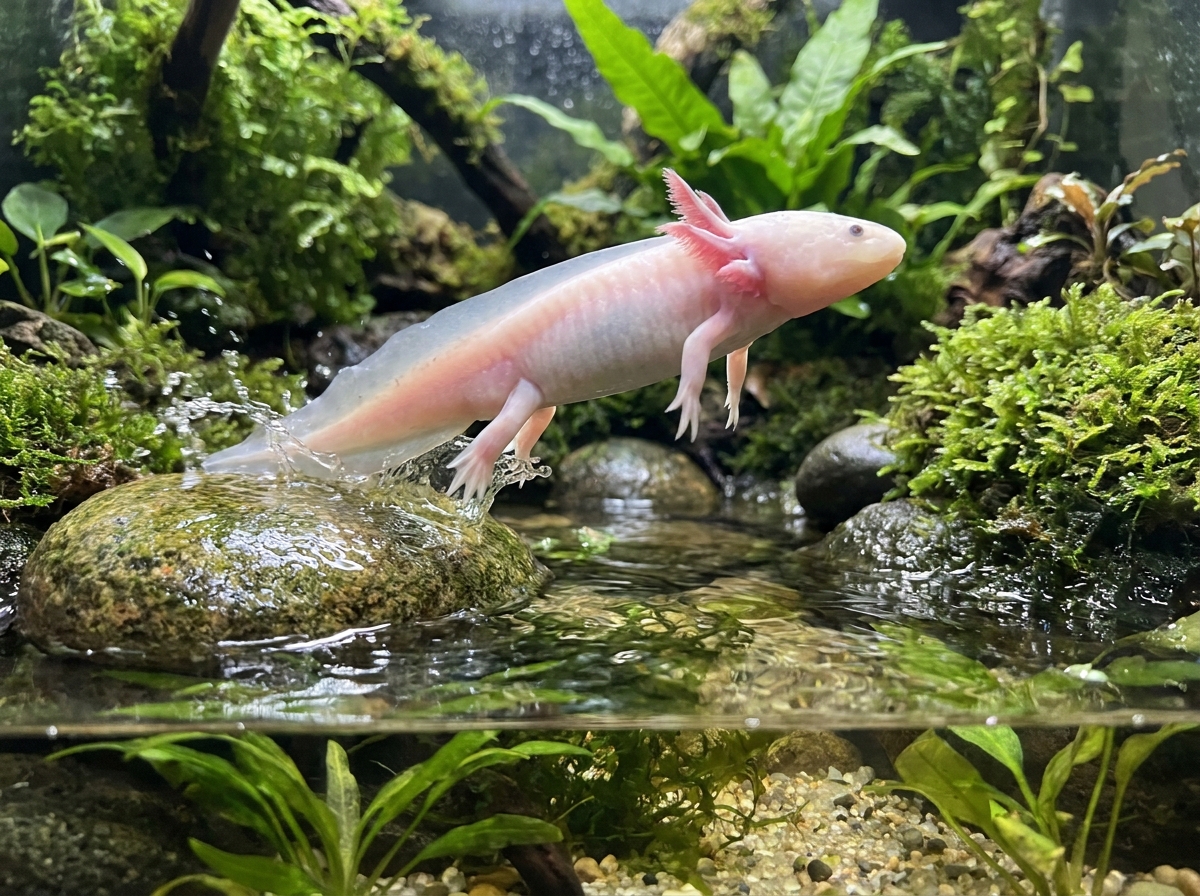
Axolotls, the fascinating aquatic creatures known for their unique appearance and regenerative abilities, often display a variety of behaviors that can leave their owners puzzled. One such behavior is jumping or hopping, which raises the question: why does my axolotl jump or hop? In this article, we will explore the reasons behind this peculiar behavior, helping you better understand your pet’s needs and habits.
Jumping can sometimes seem like a playful act, but it often signifies something more significant in the life of an axolotl. Understanding the underlying causes can help you provide a better environment for your aquatic friend. So, let’s dive into the world of axolotls and uncover the reasons for their bouncy antics.

Natural Behavior and Instincts of Axolotls
Axolotls are naturally curious and active creatures. In their native habitat, they exhibit various behaviors that include swimming, exploring, and sometimes jumping or hopping. This behavior can be attributed to several factors that are instinctual and vital for their survival. In the wild, jumping is not merely a recreational activity; it’s a critical aspect of their survival strategy.
For instance, axolotls use their jumping abilities to navigate through complex underwater landscapes filled with rocks and plants. This skill helps them avoid predators and find food more effectively. Consequently, when they exhibit jumping behavior in captivity, it can often be traced back to these instinctual habits honed over thousands of years.
Exploration and Curiosity
In the wild, axolotls are known to roam their environment in search of food, shelter, and potential mates. This exploratory nature often leads them to jump around as they navigate through their surroundings. If your axolotl is jumping, it might simply be its way of exploring the boundaries of its tank.
This exploratory behavior is vital for their mental stimulation and overall health. Axolotls are intelligent creatures, and a lack of stimulation can lead to boredom and stress. By jumping, they are not only satisfying their curiosity but also maintaining their physical fitness. Engaging them with various decorations or hiding spots in their tank can encourage this natural behavior, making their environment more enriching.
Defense Mechanism
Jumping can also serve as a defense mechanism. In the wild, a sudden leap may help them evade predators. If your axolotl feels threatened by something in its environment, such as sudden movements or loud noises, it may jump as a way to escape perceived danger. This instinctual response is crucial for their survival.
Understanding this behavior is essential. If you notice your axolotl jumping more frequently, it may be a signal that something in the environment is causing stress or anxiety. Factors such as aggressive tank mates, bright lights, or noisy surroundings can all contribute to this heightened state of alertness. Observing your axolotl’s behavior closely can help you identify potential stressors and take corrective measures.
Physical Health and Activity Levels
Healthy axolotls are generally more active and playful. If your axolotl is jumping frequently, it could be a sign that it is well-fed and healthy. Regular activity, including jumping, is essential for maintaining muscle tone and overall well-being. A well-exercised axolotl is more likely to exhibit normal behaviors, including swimming and exploring.
However, if the jumping seems excessive or erratic, it might be worth investigating further. Monitoring your axolotl’s feeding schedule, water quality, and tank conditions can provide insights into whether its health is optimal. Moreover, understanding the signs of stress versus playful hopping can help you gauge your pet’s well-being more accurately.

Environmental Factors Influencing Jumping Behavior
The environment in which your axolotl resides plays a crucial role in its behavior. Factors such as water quality, tank size, and decorations can significantly influence how active your axolotl is and how often it jumps. A well-maintained tank can greatly enhance your axolotl’s quality of life.
📖 Baca juga: 5 Surprising Reasons Why Is My Axolotl Floating? Discover Solutions to Keep Them Healthy!
Adequate environmental stimulation is essential for preventing boredom and stress. A tank that mimics the axolotl’s natural habitat can help reduce jumping caused by anxiety or discomfort. This includes providing hiding spots, live plants, and a substrate that allows for natural digging and exploration.
Tank Size and Layout
A cramped or poorly designed tank can lead to stress in axolotls, prompting them to jump in search of more space. Ensure your tank is adequately sized and provides ample room for swimming and exploration. A larger tank allows for more natural behaviors, reducing stress and encouraging healthy activity.
Moreover, the layout of the tank matters significantly. Incorporating different levels, caves, and plants can provide your axolotl with places to hide and explore, which may diminish their need to jump out of restlessness or anxiety. An ideal tank setup mimics the natural habitat of axolotls, offering both open swimming areas and secluded spots for security.
Water Quality and Temperature
Poor water quality can also lead to increased jumping behavior. If the water is too warm, too cold, or has not been properly filtered, your axolotl may jump in an attempt to escape discomfort. Regularly testing the water parameters and maintaining optimal conditions is essential for your axolotl’s health.
The ideal temperature for axolotls typically ranges from 60°F to 64°F (16°C to 18°C). Fluctuations outside this range can cause stress, leading to erratic behaviors, including jumping. Regular water changes and the use of a reliable filtration system can help maintain water quality and comfort levels for your axolotl.
Tank Mates and Social Interactions
Axolotls are generally solitary creatures, but if housed with other species, they may feel threatened or stressed, leading to jumping. It’s essential to monitor interactions between tank mates and ensure that your axolotl has a peaceful environment to thrive in. If you notice aggressive behavior from other tank inhabitants, consider rehoming them.
Some fish or aquatic creatures may nip at the axolotl’s gills or fins, resulting in discomfort that can manifest as jumping. Therefore, it’s vital to research compatible species before introducing any tank mates. Providing a stress-free environment can significantly reduce jumping behavior associated with social interactions.

Common Misconceptions About Axolotl Jumping
Many axolotl owners might have misconceptions about why their pets jump. Understanding the truth behind these myths can help you better care for your axolotl. This clarity can lead to improved care practices and a healthier environment for your pet.
Jumping Indicates Illness
One common myth is that frequent jumping indicates illness. While excessive jumping can be a sign of stress or discomfort, it does not necessarily mean your axolotl is sick. It’s important to observe other behaviors and signs before concluding health issues. Look for additional symptoms such as lethargy, loss of appetite, or abnormal physical changes.
If you suspect your axolotl is ill, it is crucial to consult a veterinarian specializing in aquatic animals for a thorough examination. Early detection and treatment can significantly improve your axolotl’s prognosis and quality of life. Understanding the difference between normal jumping and signs of illness can help owners respond appropriately.
All Axolotls Jump for the Same Reasons
Another misconception is that all axolotls jump for similar reasons. Each axolotl has its own personality and may jump for different reasons based on their individual experiences and environment. Understanding your axolotl’s unique behavior is key to interpreting its actions correctly.
📖 Baca juga: Unveiling the Mystery: Why Axolotl Gills Curl and Shrink
Observing your axolotl over time can help you determine its specific triggers for jumping. Keeping a journal of your axolotl’s behavior in relation to environmental changes can provide insights into its habits and preferences. This personalized understanding allows you to cater to your axolotl’s needs more effectively.
Jumping is Always a Sign of Happiness
While jumping can be a playful behavior, it’s not always indicative of happiness. Factors such as stress or discomfort can also prompt jumping. Always assess your axolotl’s overall behavior and environment to ensure its well-being.
Recognizing the difference between playful jumping and stress-related jumping is crucial. Engaging with your axolotl through feeding or gentle interaction can help determine if its jumping is a sign of excitement or a response to discomfort. Providing a safe and enriched environment will help ensure that your axolotl’s jumping is primarily a healthy expression of its natural instincts.
Tips for Managing Your Axolotl’s Jumping Behavior
If your axolotl’s jumping behavior is becoming problematic, there are several steps you can take to help manage it effectively. Here are some tips to create a more comfortable environment for your pet.
- Ensure a spacious tank with plenty of hiding spots to reduce stress. Incorporating plants, rocks, and tunnels can create a more stimulating environment that encourages natural behaviors.
- Regularly check and maintain water quality to provide a healthy living environment. Utilize water testing kits to monitor pH, ammonia, nitrite, and nitrate levels.
- Avoid sudden movements around the tank to minimize stress triggers. A calm atmosphere can greatly reduce your axolotl’s anxiety levels.
- Consider the tank mates and ensure they are compatible with your axolotl. Research potential companions thoroughly before introducing them to the tank.
- Provide varied enrichment in the tank to stimulate your axolotl’s natural curiosity. Rotating toys or introducing new elements can keep your axolotl engaged and less likely to jump due to boredom.
By implementing these tips, you create a more harmonious environment that can help reduce excessive jumping behavior in your axolotl. A well-cared-for axolotl will not only be healthier but also display more balanced behaviors.
Conclusion: Embracing Your Axolotl’s Unique Behaviors
Understanding why your axolotl jumps or hops involves considering various factors, from natural instincts to environmental influences. By observing your pet’s behavior and making necessary adjustments to its habitat, you can ensure a happy and healthy life for your axolotl. Remember, each axolotl is unique, and what works for one may not work for another, so always be attentive to your pet’s needs.
Ultimately, embracing the quirks of your axolotl, including its jumping behavior, is part of the joy of being a responsible pet owner. With the right care and understanding, you can create an environment where your axolotl thrives. By fostering a nurturing and stimulating environment, you can help your axolotl express its natural behaviors in a way that is both healthy and enjoyable.
Pertanyaan Umum (FAQ)
Why does my axolotl jump frequently?
Your axolotl may jump frequently due to exploration, stress, or health. It’s essential to observe its behavior and environment to determine the cause.
Is jumping a sign of illness in axolotls?
Jumping is not always a sign of illness. While excessive jumping can indicate stress or discomfort, it may also be natural behavior.
How can I reduce my axolotl’s jumping behavior?
To reduce jumping, ensure your tank is spacious, maintain water quality, and minimize stressors in the environment.
Do all axolotls jump for the same reasons?
No, each axolotl is unique, and they may jump for different reasons based on their personality and environment.