Have you ever wondered how to create the perfect environment for your axolotl? A 20 gallon axolotl tank can be a delightful home for these unique creatures, but setting it up properly is crucial for their health and happiness. In this guide, we will explore everything you need to know about maintaining a thriving axolotl habitat.
Axolotls are fascinating aquatic animals known for their ability to regenerate lost body parts. These creatures require specific conditions to thrive, and understanding how to set up and care for a 20 gallon tank is essential for any axolotl enthusiast. Whether you’re a beginner or an experienced aquarium keeper, this comprehensive guide will provide you with valuable insights.
From choosing the right substrate to understanding the water parameters, we will cover all the essential aspects of setting up a 20 gallon axolotl tank. So, let’s dive in!

Understanding the Basics of a 20 Gallon Axolotl Tank
When it comes to keeping axolotls, the size of the tank plays a significant role in their well-being. A 20 gallon axolotl tank provides ample space for these amphibians to move around, explore, and express their natural behaviors. But why is a larger tank preferred?
Firstly, axolotls can grow quite large, reaching lengths of up to 12 inches. A 20 gallon tank allows them room to grow without feeling cramped. Secondly, larger tanks have a more stable environment in terms of water quality, which is vital for the health of your axolotl. The increased water volume helps dilute harmful substances and stabilizes temperature fluctuations, making it easier to maintain a consistent habitat.
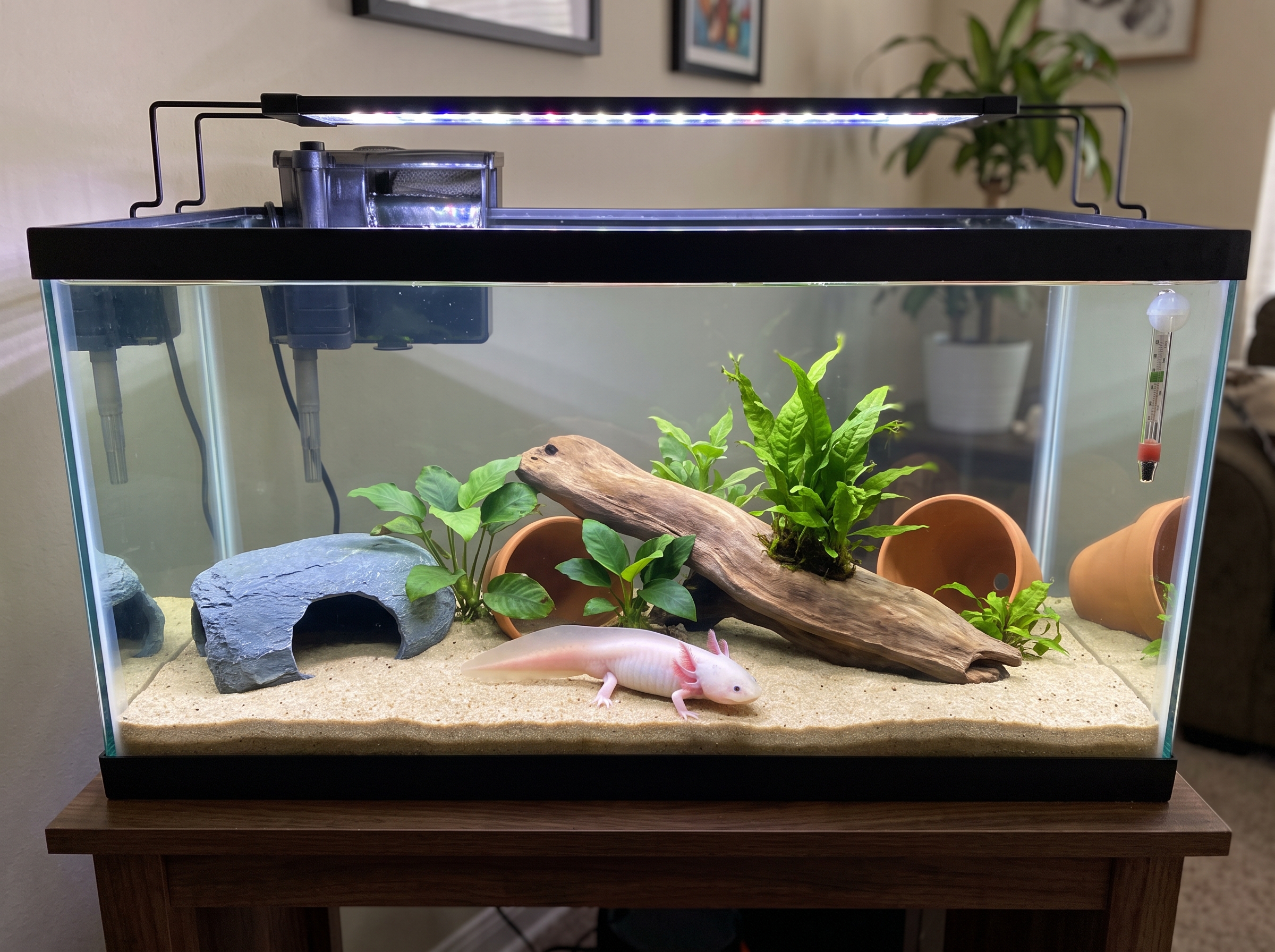
Additionally, a well-maintained 20 gallon axolotl tank can accommodate various decorations and plants, further enriching the habitat for your axolotl. These additions not only provide aesthetic appeal but also promote natural behaviors such as hiding and exploring, which are crucial for their mental well-being.
Choosing the Right Substrate for a 20 Gallon Axolotl Tank
The substrate you choose for your 20 gallon axolotl tank is crucial. Axolotls are known to ingest gravel, which can lead to serious health issues such as impaction. Instead, consider using sand or a bare-bottom tank as safer alternatives.
Sand is a popular choice among axolotl owners because it allows for natural behaviors such as digging and burrowing. When selecting sand, ensure it is smooth and free of sharp edges to prevent injury. Look for aquarium-grade sand designed specifically for aquatic life, as this will be safe and non-toxic for your axolotl. On the other hand, a bare-bottom tank, while less natural in appearance, is easier to clean and maintain, making it an excellent option for beginners or those who prefer a low-maintenance setup.
Whichever substrate you choose, regularly monitor and clean the tank to keep your axolotl environment healthy. A clean substrate is essential for preventing the buildup of waste and harmful bacteria, contributing to a stable and healthy aquatic environment.
Water Conditions and Filtration in a 20 Gallon Axolotl Tank
Water quality is paramount in a 20 gallon axolotl tank. Axolotls are sensitive to high levels of ammonia and nitrites, so it’s essential to establish a proper filtration system. A sponge filter is often recommended as it provides gentle filtration without creating strong currents that can stress your axolotl. This type of filter also offers beneficial bacteria a place to thrive, which aids in breaking down harmful substances in the water.
Regular water changes, ideally 20-30% weekly, will help maintain clean water conditions. During these changes, be sure to use a water conditioner to remove chlorine and chloramines present in tap water, which can be harmful to your axolotl. Additionally, test the water parameters frequently, ensuring that the pH is between 6.5 and 7.5, and that the temperature remains around 60-68°F. Maintaining these parameters is critical to prevent stress and health issues in your axolotl.
By maintaining proper water conditions, you can ensure a healthy and thriving axolotl environment. The goal is to create a stable ecosystem where your axolotl can flourish, emphasizing the importance of regular testing and maintenance of the water quality.
Heating and Lighting for a 20 Gallon Axolotl Tank
Unlike many tropical fish, axolotls do not require heating. In fact, they thrive in cooler water temperatures, which mimic their natural habitat in the lakes of Mexico. However, if your home temperature fluctuates significantly or if you’re in a particularly warm climate, consider using a heater with a thermostat to maintain a stable environment. It’s important to ensure the heater does not inadvertently raise the water temperature above the recommended range, as overheating can lead to stress and health issues for your axolotl.
📖 Baca juga: The Ultimate Guide to the Best Tank for Your Axolotl: Create the Perfect Habitat!
Lighting should also be kept to a minimum. Axolotls prefer dimly lit environments, so using low-intensity LED lights or having a natural light source that doesn’t shine directly into the tank is ideal. Too much light can stress axolotls and promote algae growth, which can compromise water quality. A good practice is to provide a light cycle of around 10-12 hours of light per day, giving your axolotl a clear distinction between day and night.
Remember, the goal is to create a comfortable habitat that mimics their natural environment. The right combination of temperature and lighting will help create a balanced setting where your axolotl can feel secure and thrive.

Creating a Stimulating Environment in a 20 Gallon Axolotl Tank
To keep your axolotl happy and healthy, it’s essential to create an engaging environment within the 20 gallon tank. This can include various decorations, plants, and hiding spots that not only enhance the visual appeal of the tank but also provide enrichment for your axolotl.
Live plants are a great addition as they not only enhance the aesthetic appeal but also help maintain water quality by absorbing nitrates. Some popular choices for axolotl tanks include Java fern, Anubias, and duckweed. These plants are hardy and can thrive in the cooler water conditions preferred by axolotls. Moreover, they provide hiding spots and areas for your axolotl to explore, promoting natural behaviors.
Additionally, adding rocks, caves, and other hiding spots will provide your axolotl with a sense of security. Make sure that any decorations are smooth and free from sharp edges to prevent injury. Creating a diverse habitat with various structures encourages your axolotl to explore and engage with its environment, which is vital for its mental health and well-being.
Feeding Your Axolotl in a 20 Gallon Tank
Feeding your axolotl a nutritious diet is essential for their overall health. In a 20 gallon tank, you can easily manage their feeding routine. Axolotls are carnivorous and thrive on a diet of high-quality pellets, earthworms, and live prey such as brine shrimp or bloodworms. It’s essential to provide a balanced diet that mimics their natural feeding habits to ensure they receive the necessary nutrients.
It’s crucial to feed them appropriately sized food, as oversized prey can lead to choking or digestive issues. Generally, feeding them 2-3 times a week, with portions they can consume in a few minutes, is ideal. Avoid overfeeding, as this can lead to water quality issues and obesity in your axolotl. Monitoring their feeding habits closely is critical; changes in appetite can indicate health issues or stress.
To enhance their feeding experience, consider varying their diet occasionally with different types of food. Introducing different protein sources can prevent boredom and ensure your axolotl receives a well-rounded nutritional profile. This thoughtful approach to feeding will contribute to your axolotl’s overall happiness and health.
Monitoring Health and Behavior in a 20 Gallon Axolotl Tank
Keeping an eye on your axolotl’s health is vital for ensuring a long and healthy life. Look for signs of stress or illness, such as changes in behavior, color, or appetite. Regularly check for signs of disease, such as white spots or lesions, which may indicate fungal or bacterial infections. Early detection is key to effective treatment.
Additionally, ensure that their environment is free from stressors. Overcrowding, aggressive tank mates, or poor water conditions can lead to stress, which can negatively impact their health. If you notice your axolotl hiding excessively or behaving unusually, it may be a sign of stress or discomfort in its environment.
By maintaining a stable environment and monitoring your axolotl closely, you can help ensure a long and healthy life. Regular health checks and a keen eye for any changes in behavior will allow you to address potential issues before they escalate.

The Importance of Regular Maintenance for a 20 Gallon Axolotl Tank
Regular maintenance of your 20 gallon axolotl tank is crucial for keeping your axolotl healthy. This includes routine water changes, cleaning the substrate, and checking equipment. Establishing a cleaning schedule that includes weekly water changes and monthly deep cleans is essential to maintaining a safe environment for your axolotl.
📖 Baca juga: The Ultimate Guide to Axolotl Tank Size for One: What You Need to Know
During these deep cleans, remove decorations and thoroughly clean them, replace any worn equipment, and check the filtration system. Regularly inspect your filter to ensure it is functioning properly, as a malfunctioning filter can lead to poor water quality and stress for your axolotl.
By staying on top of maintenance, you can prevent many common issues that axolotl owners face. Consistent tank upkeep not only promotes a healthy living space for your axolotl but also enhances your enjoyment of the aquarium as a whole. A well-maintained tank is not only healthier but also more aesthetically pleasing.
Common Mistakes to Avoid in a 20 Gallon Axolotl Tank
As a new axolotl owner, it’s easy to make mistakes. Some common pitfalls include overfeeding, poor water quality, and neglecting tank mates. Overfeeding can lead to serious health issues, while poor water quality can quickly endanger your axolotl’s life. It’s crucial to find a balance in feeding and be diligent about monitoring water parameters.
It’s also essential to understand that axolotls are not social creatures and should be kept alone or with non-aggressive species. Avoid introducing fast-moving fish that may stress your axolotl. Researching potential tank mates is vital before adding any new inhabitants to your axolotl’s environment.
By learning from these common mistakes, you can create a better environment for your axolotl. Engaging with the axolotl community and seeking advice from experienced keepers can also provide valuable insights that enhance your care practices.
Conclusion
Setting up a 20 gallon axolotl tank is a rewarding endeavor that requires careful planning and understanding of these unique creatures’ needs. By following the guidelines outlined in this guide, you can create a thriving habitat that will keep your axolotl happy and healthy for years to come.
Remember to maintain water quality, provide a stimulating environment, and monitor your axolotl’s health closely. With the right care and attention, your axolotl will flourish in its new home, becoming a cherished part of your aquatic family.
Frequently Asked Questions (FAQ)
How often should I change the water in a 20 gallon axolotl tank?
It is recommended to change 20-30% of the water weekly to maintain optimal water quality.
Can I keep other fish with my axolotl?
It is best to keep axolotls alone or with non-aggressive tank mates. Avoid fast-moving fish that may stress them.
What temperature is ideal for an axolotl?
Axolotls thrive in cooler water, ideally between 60-68°F.
What type of food should I feed my axolotl?
Feed your axolotl a diet of high-quality pellets, earthworms, and live prey like brine shrimp or bloodworms.