Creating an aquascape for your axolotl can be an exciting and rewarding endeavor. These unique amphibians thrive in well-designed aquatic environments that mimic their natural habitats, and a beautifully arranged aquascape not only enhances their living conditions but also adds an aesthetic appeal to your home. In this article, we will explore seven creative axolotl aquascape ideas that will not only provide a suitable environment for your pet but also create a stunning visual experience.
Whether you are a seasoned aquarist or a beginner, these ideas will inspire you to create a vibrant underwater world. You will learn about the necessary elements to consider, such as water quality, plant selection, and decorations that are safe for axolotls. Let’s dive into these creative aquascaping ideas!

Creative Axolotl Aquascape Ideas
When designing an aquascape for axolotls, it’s important to keep their specific needs in mind, including their preference for cooler water temperatures and a spacious environment. Below are seven unique ideas that can help you craft the perfect home for your axolotl.
Natural Riverbed Theme
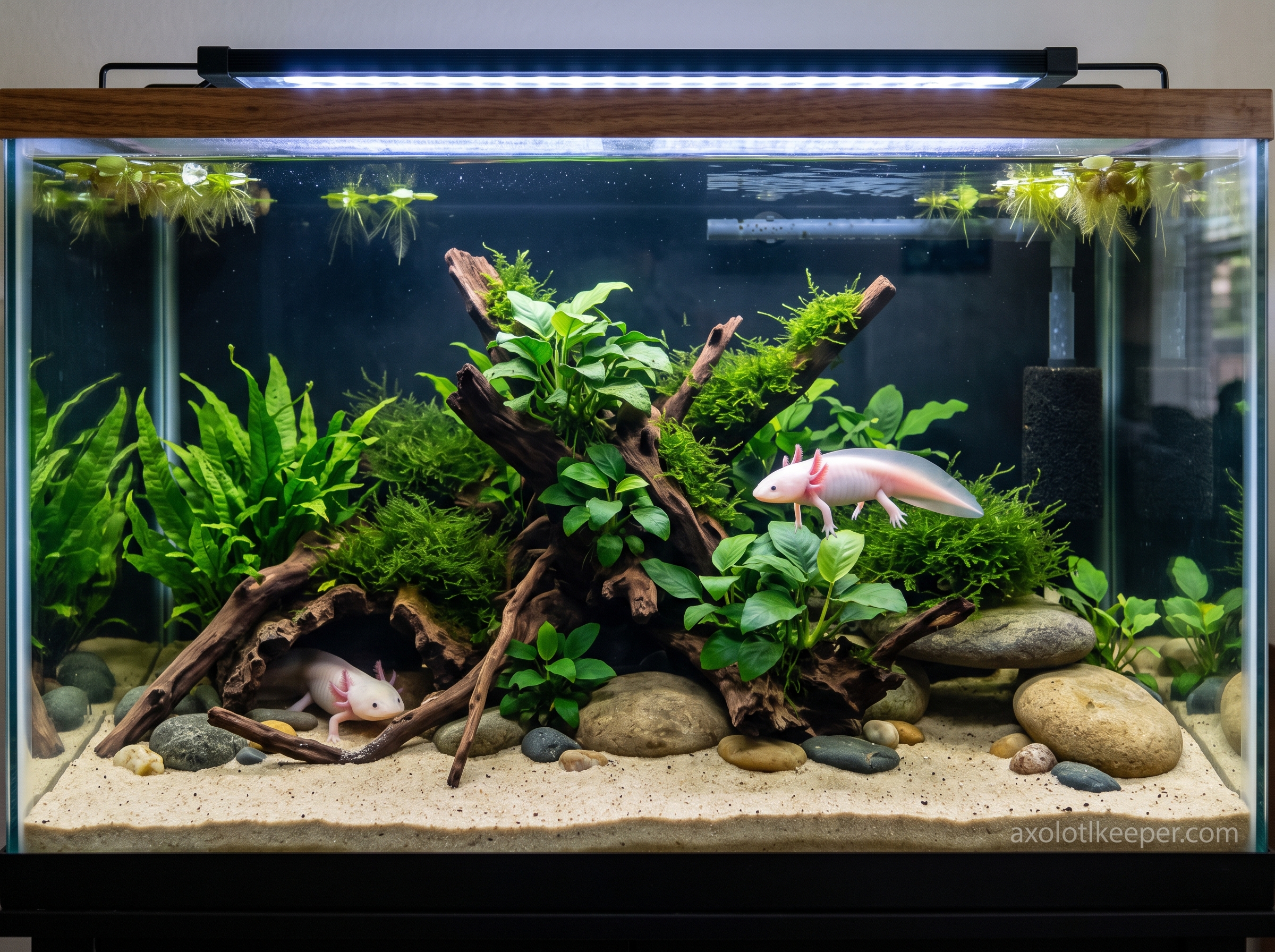
The natural riverbed theme mimics the axolotl’s natural habitat, featuring sandy substrates, rocks, and driftwood. Start by laying down a fine sand substrate that allows axolotls to dig and burrow, which is a natural behavior for them. This type of environment encourages their instinctual behaviors and can reduce stress levels. Additionally, the sand acts as a natural filter, promoting beneficial bacteria that aid in maintaining water quality.
Add a variety of smooth rocks and pieces of driftwood to create hiding spots and territories. It’s essential to select rocks that are smooth and free of sharp edges, as axolotls can be prone to injury. The driftwood should be securely placed to prevent it from floating to the surface, which can disrupt the aquascape and create hazards for your pet.
Incorporating live plants such as Java moss and Anubias can enhance the natural look while providing additional hiding spots. Ensure that the plants are anchored securely, as axolotls may uproot them while exploring their environment. These plants not only contribute aesthetic value but also help to maintain water quality by absorbing excess nutrients and providing oxygen.
Planted Jungle Aquascape
This aquascape idea focuses on lush plant life to create a jungle-like atmosphere. Use tall plants such as Vallisneria or Hornwort to create a canopy effect above the water surface, providing shade and a sense of security for your axolotl. This canopy mimics the shade provided by natural vegetation in their native environments, which can help the axolotl feel more comfortable and secure.
Layer shorter plants like Cryptocoryne and dwarf water lilies at the front to create depth and visual interest. These plants can also serve as a source of food for beneficial microorganisms, which can contribute to the overall health of your tank. This setup not only provides hiding places but also helps maintain water quality by absorbing excess nutrients and producing oxygen, which is crucial for the well-being of your axolotl.
Moreover, be mindful of the lighting in this type of aquascape; too much light can encourage algae growth, which can be detrimental to the health of your axolotl. A balance of light and shadow will keep the plants thriving while ensuring your axolotl has a comfortable habitat.

Minimalist Stone Arrangement
A minimalist aquascape can be both elegant and functional. Use a few large stones as focal points and arrange them in a way that creates open spaces for your axolotl to swim. This design minimizes clutter and makes it easier to maintain water quality. A minimalist approach allows the axolotl’s natural beauty to take center stage while providing ample swimming space, which is essential for their physical health.
In this setup, consider using a dark substrate to contrast with the stones and bring out the colors of your axolotl. The contrast can be visually stunning and creates an appealing backdrop for your aquatic pet. Additionally, choosing stones of varying sizes and textures can create visual interest without overcrowding the tank.
A few strategically placed aquatic plants can add a touch of greenery without overcrowding the space. Opt for hardy plants that won’t require extensive care, ensuring your maintenance routine remains manageable. This method not only creates a visually appealing environment but also encourages the axolotl to explore and interact with its surroundings.
Underwater Caves and Tunnels
Creating a cave system within your aquascape can be thrilling for your axolotl, as they love to explore. Use large pieces of driftwood or specially designed aquarium decorations to create tunnels and hiding spots. This setup encourages natural behaviors and provides security, as axolotls are known to seek out sheltered areas when they feel threatened or stressed.
📖 Read also: Transform Your Axolotl’s Home: 7 Stunning Tank Decoration Ideas
Make sure the caves are large enough for your axolotl to enter comfortably but not so spacious that they feel exposed. Axolotls thrive in environments where they can hide and feel secure, so consider the placement of your caves carefully. Incorporating low-light plants around the caves can create a secluded environment that mimics their natural habitat.
Furthermore, ensure that the materials used for creating caves are non-toxic and safe for aquatic life. Regularly check these areas for any debris or waste accumulation that can occur in hidden spots, as keeping these areas clean is vital for maintaining the overall health of the aquarium.

Colorful Coral Reef Simulation
For a vibrant and colorful aquascape, consider simulating a coral reef. While axolotls don’t naturally inhabit coral reefs, using brightly colored decorations can create an eye-catching display. Select non-toxic decorations that mimic coral formations and vibrant plants to enhance the visual effect. This can be a fun way to express creativity and add a splash of color to your aquarium.
Choose hardy aquatic plants that can withstand the setup, such as floating plants or hardy ferns. These plants not only add to the aesthetic appeal but also provide hiding spots and oxygenation for the water. Be sure to avoid any decorations with sharp edges that could potentially harm your axolotl.
This type of setup can also serve as an educational tool, teaching viewers about the importance of marine ecosystems. It can spark conversations about conservation and the importance of habitat preservation while providing a beautiful home for your axolotl.
Biotope Setup
A biotope aquascape replicates a specific natural habitat. For axolotls, you can create a setup that resembles a freshwater lake or stream. Use a sandy substrate, native plants like Elodea, and natural decorations such as rocks and driftwood to complete the look. This setup not only benefits your axolotl but also promotes biodiversity by providing a habitat for beneficial bacteria and microorganisms.
Incorporating native plants is crucial as they are adapted to the local environment and will thrive, contributing to the overall health of the aquarium. Furthermore, a biotope setup can help educate others about the axolotl’s natural environment and the importance of preserving such habitats.
Additionally, this type of aquascape can be more sustainable, as it often requires less maintenance and fewer artificial inputs. It allows you to create a self-sustaining ecosystem where your axolotl can thrive, exhibiting natural behaviors in a carefully crafted environment.
Seasonal Theme Aquascape
Change your aquascape according to the seasons for a dynamic and engaging environment. For example, during spring, you can incorporate vibrant green plants and pastel-colored decorations, while in autumn, you can use reddish-brown plants and decorations that reflect fall colors. This idea allows you to experiment with different setups and keep your axolotl’s environment fresh and stimulating.
Seasonal changes not only keep the aquarium visually appealing but also allow for seasonal adaptations in care and maintenance. For instance, you might choose to introduce different types of plants that thrive in specific conditions, which can enhance water quality and provide varied environments for your axolotl.
Just make sure to maintain the water parameters suitable for your axolotl throughout the seasonal changes. Regularly monitor the water quality and adjust as necessary to ensure that your axolotl remains healthy and happy in its changing environment.
Each of these creative axolotl aquascape ideas provides not only a beautiful habitat for your pet but also enriches your own experience as an aquarist. Remember to prioritize the health and well-being of your axolotl by ensuring that all materials used are safe and non-toxic.

Tips for Maintaining an Axolotl Aquascape
Once you’ve designed the perfect aquascape for your axolotl, maintaining it is crucial for the health of your pet. Regular maintenance ensures that the water quality remains optimal and that the environment stays clean and safe. This includes monitoring water parameters, cleaning the tank, and keeping the habitat engaging for your axolotl.
📖 Read also: Transform Your Axolotl Tank: The Benefits of Fake Plants
Perform regular water changes to keep the water parameters stable, and monitor ammonia and nitrite levels to prevent toxicity. Additionally, trim and care for live plants to ensure they do not overgrow and impede your axolotl’s movement. Practical maintenance routines can help you identify potential problems before they escalate, ensuring a happy and healthy environment for your pet.
Water Quality Management
Maintaining good water quality is essential for the health of your axolotl. Use a reliable filtration system suitable for the size of your tank, and regularly test the water for pH, ammonia, nitrite, and nitrate levels. Aim for a pH between 6.5 and 7.5 and keep the temperature between 16-18°C (60-64°F). Adequate filtration and water changes will help establish a healthy nitrogen cycle, which is vital for the well-being of your axolotl.
In addition to testing, consider using a water conditioner to remove harmful chemicals from tap water before adding it to the tank. It’s also advisable to perform partial water changes of about 20-30% weekly to maintain optimal conditions. Keeping a log of your water parameters can help you track changes over time and make necessary adjustments to your maintenance routine.
Feeding Considerations
Feed your axolotl a balanced diet to promote growth and health. High-quality pellets, earthworms, and small pieces of protein-rich foods are excellent options. It is important to offer a varied diet to ensure that your axolotl receives all the necessary nutrients. Research different food options and incorporate them into your feeding routine to keep your axolotl engaged and healthy.
Avoid overfeeding, as leftover food can pollute the water and negatively affect the aquascape. Monitoring your axolotl’s feeding behavior can help determine the right amount of food; typically, feeding every other day is sufficient. Additionally, using feeding tongs can help place food directly in front of your axolotl, encouraging natural hunting behaviors.

Regular Observation
Keep an eye on your axolotl’s behavior and appearance. Changes in activity level or eating habits can indicate health issues. Regular observation helps you catch potential problems early and adjust the aquascape or care routine as needed. Look for signs of stress or illness, such as changes in skin texture or color, which can be indicative of poor water quality or disease.
Additionally, observing how your axolotl interacts with its environment can provide insights into whether the aquascape is meeting its needs. Ensure that the decorations and plants are arranged in a way that promotes exploration and comfort, allowing your axolotl to thrive in its underwater paradise.
Conclusion
Creating a beautiful and functional axolotl aquascape is a rewarding experience that enhances the lives of these fascinating creatures. By considering the specific needs of axolotls and incorporating creative design elements, you can create a stunning underwater environment that is both enjoyable for your pet and visually appealing in your home. Remember to maintain the aquascape regularly to ensure a healthy habitat for your axolotl.
Frequently Asked Questions (FAQ)
What size tank is best for an axolotl?
The ideal tank size for a single axolotl is at least 20 gallons. A larger tank is preferable for multiple axolotls to provide sufficient space and reduce territorial disputes. Proper tank size is crucial for maintaining water quality and ensuring that each axolotl has enough space to thrive.
Can axolotls live with other fish?
It is generally not recommended to keep axolotls with other fish, as they may become aggressive or eat smaller fish. It’s best to keep them in species-only tanks or with very large, peaceful fish. Understanding the compatibility of your aquatic inhabitants is key to maintaining a harmonious environment.
How often should I clean the axolotl tank?
Perform partial water changes of about 20-30% weekly to maintain water quality. Clean the tank substrate and decorations as needed to prevent algae buildup and waste accumulation. Regular cleaning is essential to prevent harmful toxins from building up in the tank.
Do axolotls need a heater in their tank?
Axolotls prefer cooler water temperatures and do not typically require a heater. Ensure the water temperature stays between 16-18°C (60-64°F) for their well-being. Keeping the environment stable and within the preferred temperature range is vital for their overall health.