
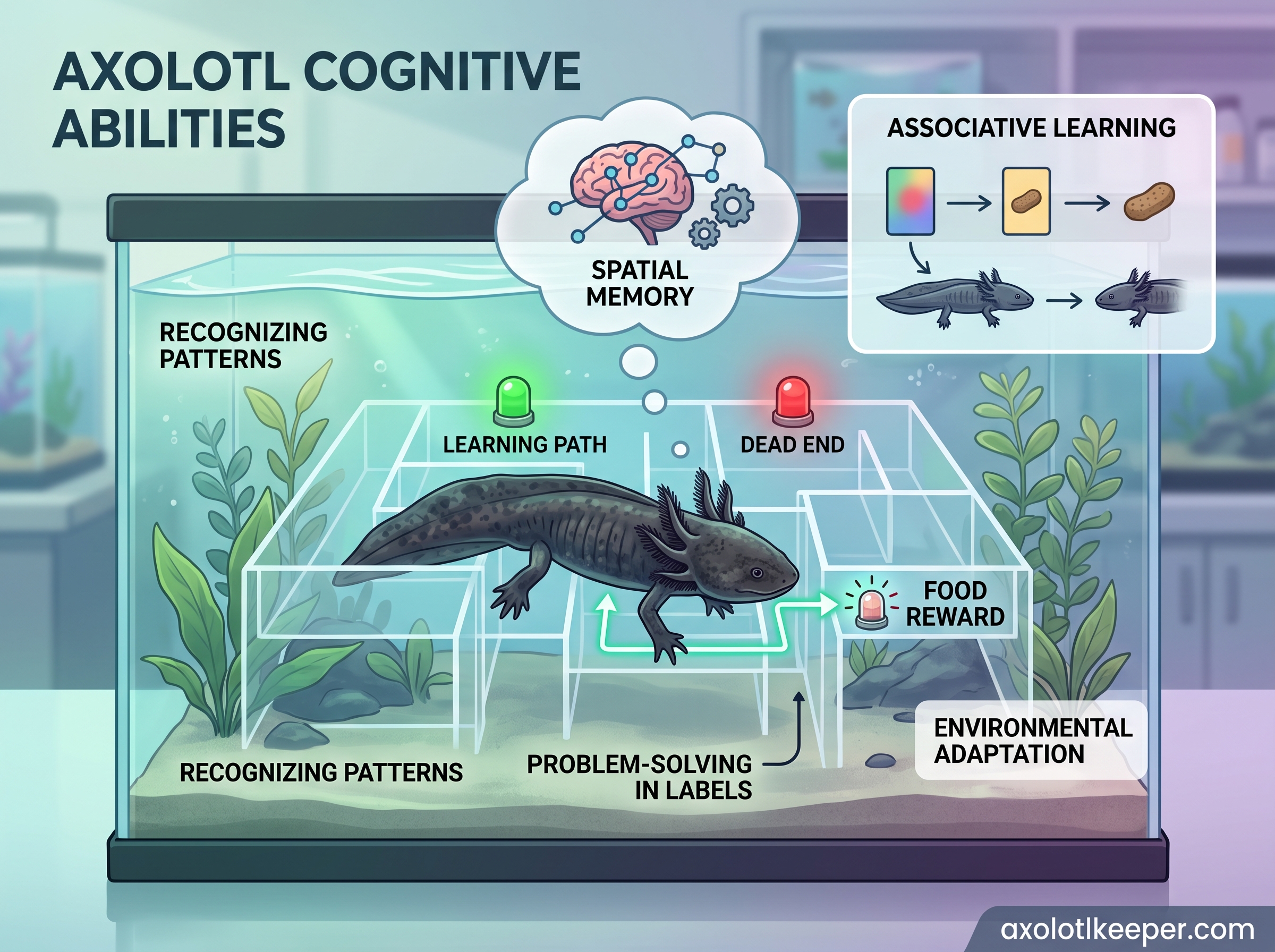
Axolotls, the fascinating aquatic creatures known for their regenerative abilities, have piqued the interest of scientists and enthusiasts alike. But beyond their remarkable ability to regrow limbs and other body parts, many wonder about their intelligence level. Do these amphibians possess cognitive skills comparable to other animals? In this article, we will explore the various aspects of axolotl intelligence, shedding light on what makes them unique in the animal kingdom.
Understanding the intelligence level of axolotls requires examining their behavior, learning capabilities, and how they interact with their environment. While they may not exhibit complex problem-solving skills like some mammals, their adaptive behaviors reveal a different kind of intelligence that is worth exploring.
Join us as we delve into the intriguing world of axolotls and uncover the layers of their intelligence, from their simple instinctual behaviors to their adaptability in captivity.

Understanding Axolotl Intelligence
To comprehend the intelligence level of axolotls, we must first define what intelligence means in the context of animal behavior. Intelligence can manifest in various forms, including problem-solving, social interaction, and adaptability to new environments. Axolotls, being amphibians, possess a different set of cognitive skills compared to mammals or birds.
Research indicates that axolotls have a relatively simple nervous system, which limits their ability to engage in complex tasks. However, they demonstrate a range of behaviors that suggest a level of awareness and adaptability. For instance, axolotls can recognize their owners and may even learn to associate feeding times with specific cues. This adaptability to their surroundings is a crucial aspect of their intelligence.
Additionally, studies have shown that axolotls can alter their behavior based on environmental changes, showcasing their ability to learn from experiences. This can be observed in how they respond to different stimuli in their environment, such as light or movement, indicating that they can process information and make decisions based on their surroundings. Although they may not pass tests of intelligence designed for more complex organisms, their unique adaptations and behaviors reveal a different but equally fascinating perspective on intelligence in the animal kingdom.
Factors Influencing Axolotl Behavior
Several factors can influence the behavior of axolotls, which in turn contributes to our understanding of their intelligence level. These factors include environmental conditions, social interactions, and individual personality traits.
First, the environment plays a significant role in shaping axolotl behavior. In the wild, axolotls are found in lakes and canals, where they must navigate various challenges such as predators and food scarcity. This natural habitat fosters their instinctual behaviors, which are vital for survival. For example, in the presence of predators, axolotls have been observed to display defensive behaviors, such as hiding or becoming less active, which are essential for their survival.
In captivity, however, the environment can be controlled, allowing for different behavioral adaptations. Owners often provide various hiding spots and substrates to mimic natural habitats, which can encourage more natural behaviors. This controlled setting allows researchers to observe how axolotls adapt their behaviors in response to changes in their environment, offering insights into their cognitive abilities.
📖 Read also: Essential Guide to Axolotl Water Parameters: Temperature, pH, and Ammonia Levels
Environmental Adaptability
Environmental adaptability is crucial for axolotls, especially when considering their survival in changing habitats. In captivity, owners often notice that axolotls adapt to their feeding schedules and the presence of humans. For instance, they may become more active during feeding times, indicating an understanding of their routine. This behavior suggests that axolotls can learn to anticipate events based on prior experiences.
Moreover, their adaptability extends to their physical environment. Axolotls can adjust their behavior based on water temperature, pH levels, and the presence of other organisms in their tank. For example, if the water temperature fluctuates significantly, they may display lethargic behavior, indicating their sensitivity to environmental changes. Such responses highlight their ability to assess their surroundings and react accordingly, showcasing a basic level of environmental awareness.
Learning Through Experience
Learning through experience is a significant aspect of axolotl behavior. Research has shown that these amphibians can learn through conditioning, similar to classical conditioning in other animals. For example, if an axolotl receives food after a specific stimulus, such as a light turning on, they can learn to associate that stimulus with feeding time. This ability to learn and adapt shows a level of intelligence, although it may not be as sophisticated as that of higher mammals.
Additionally, there is evidence that axolotls can learn from their interactions with their environment. For instance, if they encounter an unpalatable food item, they may avoid it in the future, demonstrating a form of associative learning. This learning mechanism is crucial for their survival, as it helps them make better choices regarding food and other environmental interactions.
Individual Personality Traits
Just like humans, axolotls can exhibit varying personality traits. Some may be more curious and active, while others may be more reserved. These individual differences can affect how they respond to new situations and their overall behavior. For example, a more adventurous axolotl may explore new objects placed in their tank, while a more timid one may retreat to a hiding spot.
Understanding these personality traits can provide insight into their cognitive abilities, as more curious axolotls may explore their environment more thoroughly, indicating a different level of engagement with their surroundings. Furthermore, personality traits can influence social behaviors, such as how they interact with tank mates during breeding or territorial disputes. Recognizing these differences is essential for creating a suitable environment that caters to their unique needs.

Common Misconceptions About Axolotl Intelligence
There are several misconceptions regarding axolotl intelligence that deserve clarification. One of the most common is the belief that they are not capable of learning or recognizing their owners. In reality, many axolotl owners report that their pets show signs of recognition, often becoming more active when their owner approaches the tank. This behavior suggests that axolotls can form bonds with their caregivers and respond to social cues.
Another misconception is that axolotls are purely instinctual creatures, devoid of any cognitive capacity. While their behaviors are indeed driven by instincts, there is evidence of learning and adaptation that challenges this notion. For instance, the ability to associate feeding times with specific stimuli indicates a level of cognitive function that is not purely instinctual. This highlights the importance of recognizing that intelligence can vary widely across species and is not solely defined by complex problem-solving abilities.
📖 Read also: The Fascinating Stillness of Axolotls: Nature’s Unique Adaptation
Lastly, some people may assume that because axolotls can be kept in relatively simple tank setups, they lack intelligence. However, the simplicity of their care does not diminish their cognitive abilities. Instead, it reflects their adaptability to different environments, showcasing a different kind of intelligence that is well-suited to their lifestyle. This adaptability allows them to thrive in various conditions, reflecting their evolutionary success as a species.
Conclusion: The Unique Intelligence of Axolotls
In conclusion, the intelligence level of axolotls is a fascinating subject that reveals the complexity of animal behavior. Although they may not exhibit intelligence in the conventional sense, their ability to learn, adapt, and interact with their environment demonstrates a unique form of cognitive skill. Understanding these aspects of axolotl intelligence not only enriches our appreciation for this remarkable species but also challenges our perceptions of intelligence across the animal kingdom.
As we continue to learn more about axolotls and their behaviors, it becomes clear that intelligence can take many forms, each suited to the needs and environment of the species. The axolotl stands as a testament to the diversity of life and the myriad ways in which creatures navigate the world around them. Their ability to adapt, learn from experience, and even exhibit individual personality traits emphasizes that intelligence is not a one-size-fits-all concept but rather a spectrum that varies across the animal kingdom.
Understanding axolotls and their intelligence allows us to appreciate not only their unique biological attributes but also the broader implications of animal cognition. As researchers continue to explore the depths of animal intelligence, the axolotl serves as a key example of how even simpler organisms can exhibit complex behaviors that challenge our traditional views of what it means to be intelligent.
Frequently Asked Questions (FAQ)
Are axolotls intelligent animals?
Yes, axolotls exhibit various behaviors that suggest a level of intelligence, including learning and adapting to their environment.
Can axolotls recognize their owners?
Many axolotl owners report that their pets show signs of recognition and become more active when their owners approach.
How do environmental factors affect axolotl behavior?
Environmental factors, such as habitat conditions and social interactions, significantly influence axolotl behavior and adaptability.
What are some common misconceptions about axolotl intelligence?
Common misconceptions include the belief that axolotls cannot learn or that they are purely instinctual creatures. In reality, they demonstrate learning capabilities and individual personality traits.