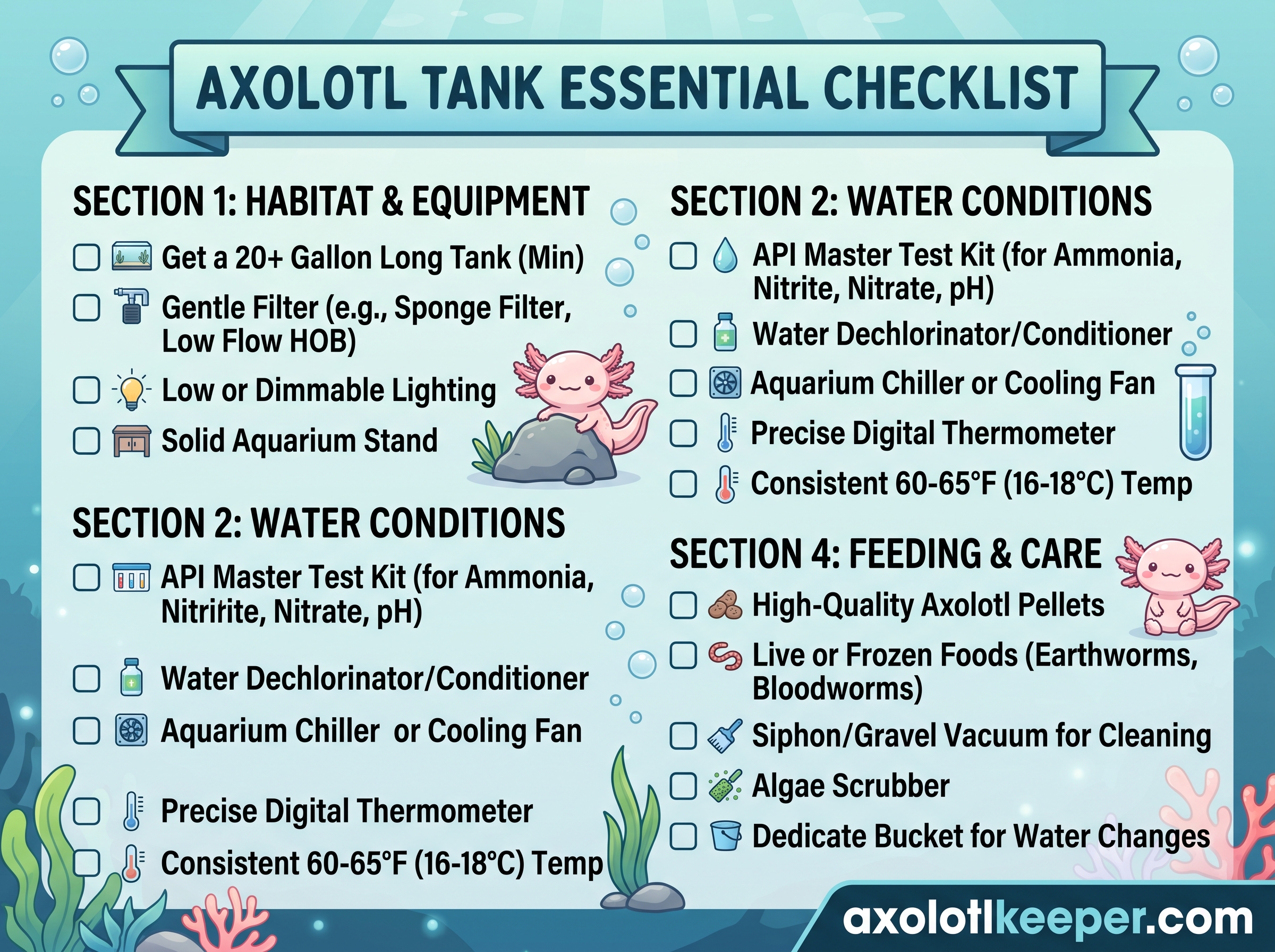
Axolotls, the enchanting aquatic creatures, have gained immense popularity as pets due to their unique appearance and fascinating regenerative abilities. However, to ensure that these incredible animals thrive in captivity, it is crucial to create the right environment for them. A well-prepared tank is the foundation of a healthy axolotl life. This article will guide you through an essential checklist that covers everything you need to know about setting up and maintaining an axolotl tank.
Creating the perfect habitat involves more than just filling a tank with water. It requires careful consideration of various factors such as tank size, water quality, substrate, and decorations. By following our comprehensive checklist, you’ll ensure your axolotl has a safe, comfortable, and stimulating environment.
Let’s dive into the essential components of an axolotl tank checklist!

Essential Components of an Axolotl Tank Checklist
Setting up an axolotl tank involves multiple considerations to create an optimal living space for your pet. The following points outline the critical elements required to maintain a healthy aquatic environment. These steps are crucial not just for the well-being of your axolotl but also for the aesthetic appeal of your tank. Understanding these components will help you create a thriving habitat that mimics their natural environment while ensuring their health and well-being.
Tank Size
The first step in preparing a tank for your axolotl is determining the appropriate size. Axolotls can grow quite large, reaching up to 12 inches in length. Therefore, it’s essential to provide ample space for them to swim and explore. A minimum of 20 gallons is recommended for a single axolotl, with additional space required for each additional axolotl. A larger tank not only provides more swimming space but also helps maintain stable water parameters, which is crucial for these sensitive creatures.
When considering tank size, it’s important to think long-term. If you plan to have more than one axolotl, consider a larger tank from the start to avoid having to upgrade later. Additionally, larger tanks have more water volume, which can buffer against fluctuations in water conditions, making it easier to maintain a healthy environment.
Water Quality
Water quality is paramount for the health of your axolotl. This involves monitoring the temperature, pH level, ammonia, nitrite, and nitrate levels. Axolotls prefer cooler water temperatures between 60°F and 68°F (15°C to 20°C). It’s crucial to use a reliable aquarium thermometer to keep track of the water temperature. Regular water changes (about 20-30% weekly) and the use of a good filtration system can help maintain water quality. Keeping the water clean will prevent health problems related to poor water conditions, such as infections or stress.
In addition to regular water changes, you should also consider using a water conditioner to remove harmful chemicals like chlorine and chloramine from tap water. Testing your water regularly with reliable test kits will help you catch any issues before they become serious. Aim for a pH level between 6.5 and 7.5 for optimal health, as extreme fluctuations can stress your axolotl and lead to serious health issues.
Substrate Selection
Choosing the right substrate is vital for your axolotl’s safety. Avoid using gravel, as axolotls may accidentally ingest it, leading to serious health issues. Instead, opt for a bare-bottom tank or use fine sand that they cannot swallow. This setup not only protects their health but also makes cleaning easier. A bare-bottom tank allows for easy removal of uneaten food and waste, which helps maintain water quality.
If you choose to use sand, ensure it is specifically designed for aquariums and is fine enough to avoid any ingestion risks. Additionally, a bare-bottom tank can be aesthetically pleasing if you decorate it thoughtfully with plants and hiding spots. Remember, the goal is to create an environment that is both safe and stimulating for your axolotl.

Tank Decorations and Hiding Spots for Axolotls
Creating a stimulating environment with decorations and hiding spots is essential for the well-being of your axolotl. These elements provide enrichment and reduce stress, allowing your pet to exhibit natural behaviors. Axolotls are naturally shy creatures, so having places to hide can help them feel secure and comfortable in their environment. Here are some tips for selecting the right decorations:
Hiding Places
Axolotls are naturally shy creatures and appreciate having hiding spots to retreat to when they feel threatened. Utilize items like PVC pipes, caves, or specially designed aquarium ornaments that offer safe hiding places. Ensure that all decorations are smooth and free of sharp edges to prevent injury. Providing multiple hiding spots can also help reduce territorial disputes if you have more than one axolotl.
In addition to artificial ornaments, consider adding natural elements like driftwood or rocks, which can also serve as hiding spots. Just make sure they are aquarium-safe and won’t leach harmful substances into the water. Regularly check these items for any wear and tear, as they can develop sharp edges over time that might injure your axolotl.
📖 Read also: Transform Your Axolotl Tank: The Benefits of Fake Plants
Plants
Incorporating live or artificial plants can enhance the aesthetic appeal of your tank while also providing hiding spots. Live plants, such as Java moss or Anubias, can improve water quality by absorbing harmful substances. They also provide additional surfaces for beneficial bacteria to grow, which can help in the biological filtration process. However, ensure that any plants are non-toxic and suitable for axolotl habitats.
When adding plants, be mindful of their growth requirements. Some plants may need specific lighting or substrate conditions to thrive. If you prefer low-maintenance options, consider using hardy, low-light plants that can survive in cooler water temperatures. Always rinse any new plants thoroughly to remove any pesticides or chemicals before introducing them into the tank.
Aquatic Accessories
Adding accessories like driftwood or rocks can create a more natural environment. Just make sure they are safe for aquatic use and won’t leach harmful substances into the water. Always clean and rinse any decorations thoroughly before introducing them into the tank. Accessories can also help create visual barriers, which can reduce stress and aggression among axolotls.
Consider the layout of your accessories carefully. Placing them strategically can encourage your axolotl to explore and engage with their environment. Remember that these creatures are curious and enjoy investigating their surroundings, so creating a dynamic tank layout can enhance their quality of life.
Feeding and Nutrition for Axolotls
Feeding your axolotl a balanced diet is crucial for its health and longevity. Understanding their dietary needs will help you make informed choices. A well-nourished axolotl is more resilient against diseases and stress. Here are some key points to consider:
Dietary Options
Axolotls are carnivorous and thrive on a diet of high-quality pellets, earthworms, and other protein-rich foods. You can also introduce live food, such as bloodworms or brine shrimp, to enrich their diet. It’s essential to avoid overfeeding, as this can lead to health issues such as obesity or water quality problems due to uneaten food decaying in the tank.
When offering pellets, choose those specifically formulated for axolotls or carnivorous amphibians. These pellets usually contain the right balance of nutrients necessary for their growth. Additionally, varying their diet with fresh or frozen foods can prevent them from becoming picky eaters and promote better overall health.
Feeding Frequency
Young axolotls require feeding every day, while adults can be fed every other day. Monitor their weight and adjust feeding schedules as needed to maintain a healthy body condition. Removing uneaten food after feeding is also essential to prevent water quality issues. Overfeeding can lead to constipation, which is a common problem among axolotls.
To gauge the appropriate amount of food, consider the size of your axolotl. A good rule of thumb is to offer food that is roughly the size of their head. Adjust the quantity based on their activity level and appetite. Also, be mindful of their growth stages, as younger axolotls will require more frequent feeding compared to adults.
Supplementation
Consider supplementing their diet with vitamin and mineral products to ensure they receive all necessary nutrients. This is especially important if you are feeding them a limited variety of foods. Calcium is particularly important for axolotls to maintain their bone health and support their growth.
You can provide supplements in the form of powders or specially formulated foods that contain additional vitamins. However, be cautious not to over-supplement, as excessive nutrients can be just as harmful as deficiencies. Always follow the recommended dosages and consult with a veterinarian experienced in amphibian care if you have concerns about their diet.
Regular Maintenance and Care for an Axolotl Tank
Once your axolotl tank is set up, regular maintenance is crucial to keep the environment healthy. Here are some important maintenance tasks that should be part of your routine:
📖 Read also: The Ultimate Guide to Live Plants for Your Axolotl Tank
Water Testing
Regularly test the water parameters using aquarium test kits. Monitoring pH, ammonia, nitrite, and nitrate levels will help you maintain a stable environment. Aim for a pH level between 6.5 and 7.5 for optimal health. Testing water every week can help you catch fluctuations early, allowing you to address any issues before they affect your axolotl.
It’s also beneficial to keep a log of your water parameters to identify trends over time. If you notice any significant changes, investigate the potential causes, such as overfeeding, inadequate filtration, or the introduction of new decorations that may affect water chemistry.
Cleaning Schedule
Establish a routine for cleaning the tank. This includes vacuuming the substrate, performing partial water changes, and cleaning the filter as needed. Keeping the tank clean helps prevent the buildup of harmful substances. A well-maintained tank not only looks better but also provides a healthier environment for your axolotl.
Depending on the bioload of your tank, you may need to adjust your cleaning frequency. Tanks with more inhabitants or higher feeding rates will require more frequent cleaning and water changes. Always monitor the clarity of the water and the conditions of the decorations and substrate to determine when additional cleaning is necessary.
Observation
Regularly observe your axolotl for any signs of illness or stress. Look for changes in behavior, appetite, or physical appearance. Early detection of issues can lead to prompt intervention and treatment. Some common signs of distress include lethargy, abnormal swimming patterns, or changes in coloration.
It’s also important to observe how your axolotl interacts with its environment. If you notice it hiding excessively or not exploring its tank, it may be stressed or uncomfortable. Providing a varied environment with plenty of hiding spots and enrichment can help alleviate stress and promote natural behaviors.
Conclusion
Setting up an axolotl tank involves careful planning and attention to detail. By following this axolotl tank checklist, you can ensure your pet has a safe, healthy, and enriching environment. Remember that a well-maintained tank not only promotes the well-being of your axolotl but also enhances your enjoyment as a pet owner. With the right knowledge and dedication, you can create a thriving habitat for these unique and captivating creatures.
By adhering to these guidelines and regularly monitoring your tank conditions, you can enjoy a long and fulfilling relationship with your axolotl. Their unique behaviors and charming personalities will bring joy to your life, making the effort you put into their care truly worthwhile.
Frequently Asked Questions (FAQ)
What size tank do I need for an axolotl?
A minimum of 20 gallons is recommended for a single axolotl, with more space required for additional axolotls.
Can axolotls live with other fish?
It’s best to keep axolotls alone or with other axolotls, as they can be territorial and may eat smaller fish.
How often should I change the water in the axolotl tank?
Perform partial water changes of 20-30% weekly to maintain water quality and keep your axolotl healthy.